Tell us about the job
Takes about a minute. No obligation.
A contractor quoting furnace installation in Fayette County sizes the job around what this area's weather actually asks of a heating system, and that picture is grounded in what the record shows. 36 severe weather events were recorded in Fayette County, Illinois between 2015 and 2024. At that rate, severe weather is an event here rather than a standing condition, which means age, installation quality, and how well the previous system was maintained are what shape the work ahead. A furnace running through mild-to-average weather stress and still struggling has a problem a contractor diagnoses in the unit itself, in the ductwork, or in how the original job was done.
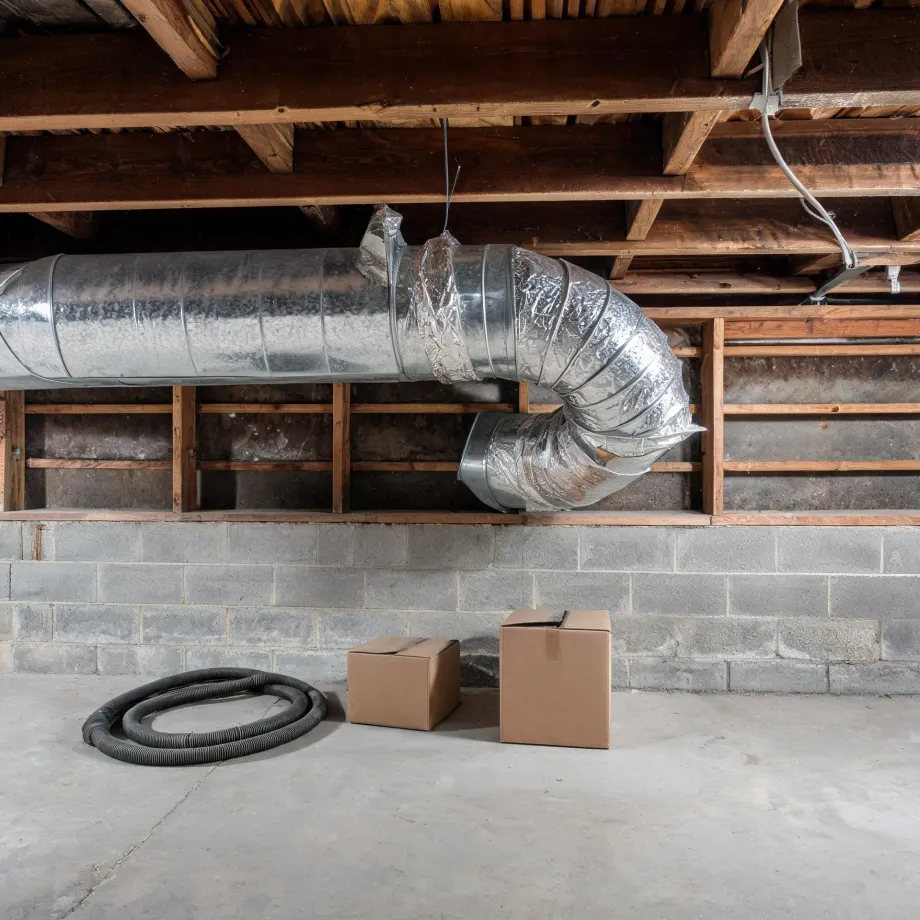
Ductwork laid in for one generation of heating equipment does not automatically carry the next. Half the homes in Fayette County, Illinois were built in 1972 or earlier (2020-2024 ACS 5-year). A contractor installing a furnace in this county has to assess what the existing trunk lines and branch runs will actually do with the airflow a new unit demands, and in stock this age that assessment often turns up runs that are undersized, poorly sealed, or both. The electrical side gets the same look: what the panel was wired for and what a modern furnace draws are questions answered by opening the box, not by reading the permit date.
What Gets Installed With a New Furnace
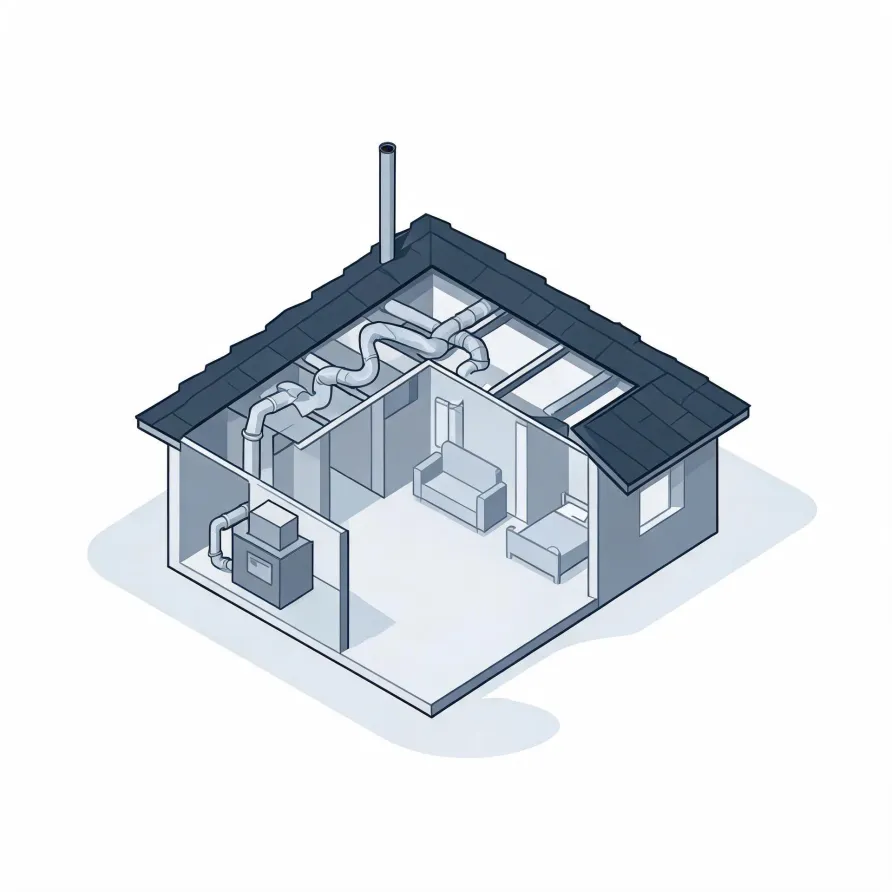
The furnace itself sits in a utility space, a basement, or a dedicated mechanical closet near the center of the house. It holds the burner assembly, the heat exchanger, and the blower, all in a single cabinet. That cabinet is what a contractor sets in place and connects to the rest of the system.
The flue pipe runs from the cabinet up and out through the roof or an exterior wall, carrying combustion gases out of the house. Alongside the furnace, a contractor installs the thermostat on an interior wall, placing it where it can read the air temperature of the living space and signal the furnace when to fire.
The drawing shows a typical layout, and a licensed contractor determines what fits the configuration of your specific home.
Get matched in Fayette CountyFayette County by the Numbers
36 severe weather events were recorded in Fayette County, Illinois between 2015 and 2024.
NOAA National Centers for Environmental Information, Storm Events Database, bulk CSV export, events 2015-01-01 through 2024-12-31.Half the homes in Fayette County, Illinois were built in 1972 or earlier (2020-2024 ACS 5-year).
U.S. Census Bureau, 2020-2024 American Community Survey 5-Year EstimatesFayette County, Illinois holds 8,808 housing units (2020-2024 ACS 5-year).
U.S. Census Bureau, 2020-2024 American Community Survey 5-Year EstimatesOwners occupy 80.6% of the occupied homes in Fayette County, Illinois (2020-2024 ACS 5-year).
U.S. Census Bureau, 2020-2024 American Community Survey 5-Year EstimatesFurnace Installation Rules for Fayette County, Illinois5 sourced codes and standards
What the installation looks like from your side
Non-weatherized gas furnaces manufactured on or after November 19, 2015 must reach 80.0 percent AFUE.
Non-weatherized oil-fired furnaces manufactured on or after November 19, 2015 must reach 83.0 percent AFUE.
Mobile home gas furnaces manufactured on or after November 19, 2015 must reach 80.0 percent AFUE.
Non-weatherized gas furnaces manufactured on or after December 18, 2028 must reach 95.0 percent AFUE, up from the 80.0 percent minimum that applies to units manufactured before that date.
Licensing and Legal Requirements for HVAC Work in Fayette County, Illinois
Illinois leaves HVAC licensing to the municipality: state law lets the corporate authorities of each city or village examine, license and regulate heating, air conditioning and refrigeration contractors, and caps the licence fee they may charge at $50 — so who licenses you depends on the town you work in.
Severe Weather Events in Fayette County
Weather puts a measurable load on heating equipment, and that load varies by location. What moves through Fayette County shapes how hard a furnace has to work and how quickly its components wear.
36 severe weather events, 2015–2024. Source: NOAA National Centers for Environmental Information, Storm Events Database.