Tell us about the job
Takes about a minute. No obligation.
A contractor quoting a furnace repair here starts with the unit's service history and installation quality, not with what the sky has thrown at it. 62 severe weather events were recorded in Pike County, Illinois between 2015 and 2024. At that rate, severe weather is an occasional event in this county, not a steady operating condition, so blaming a failed heat exchanger or a worn inducer motor on storm exposure rarely holds up. Age and deferred maintenance account for most of what contractors find when they open a furnace in Pike County.
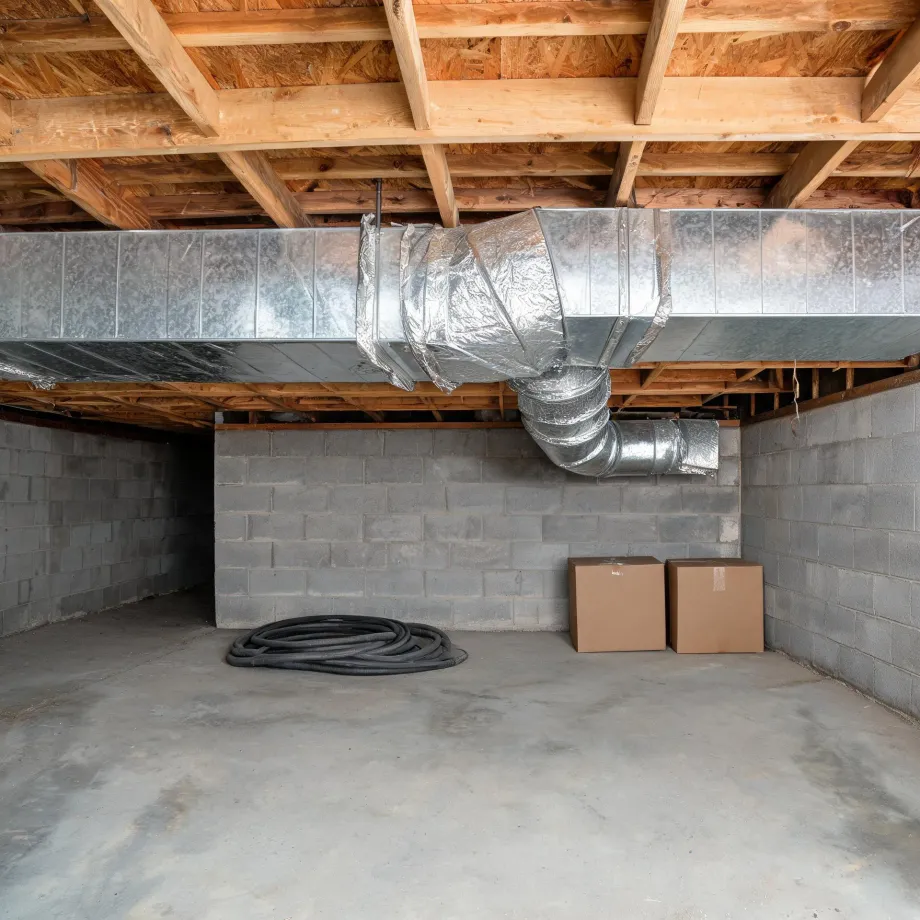
Ductwork and flue runs in a house built for an earlier era of heating carry the record of every system that came before the current one. Half the homes in Pike County, Illinois were built in 1961 or earlier (2020-2024 ACS 5-year). That history shows up inside an opened furnace as repairs layered on repairs, heat exchanger seams that have been sealed before, and draft connections that were adapted rather than replaced. A contractor working on a furnace in stock like this reads those layers to find what failed now and what is close behind it.
The Parts of a Furnace a Contractor Checks First
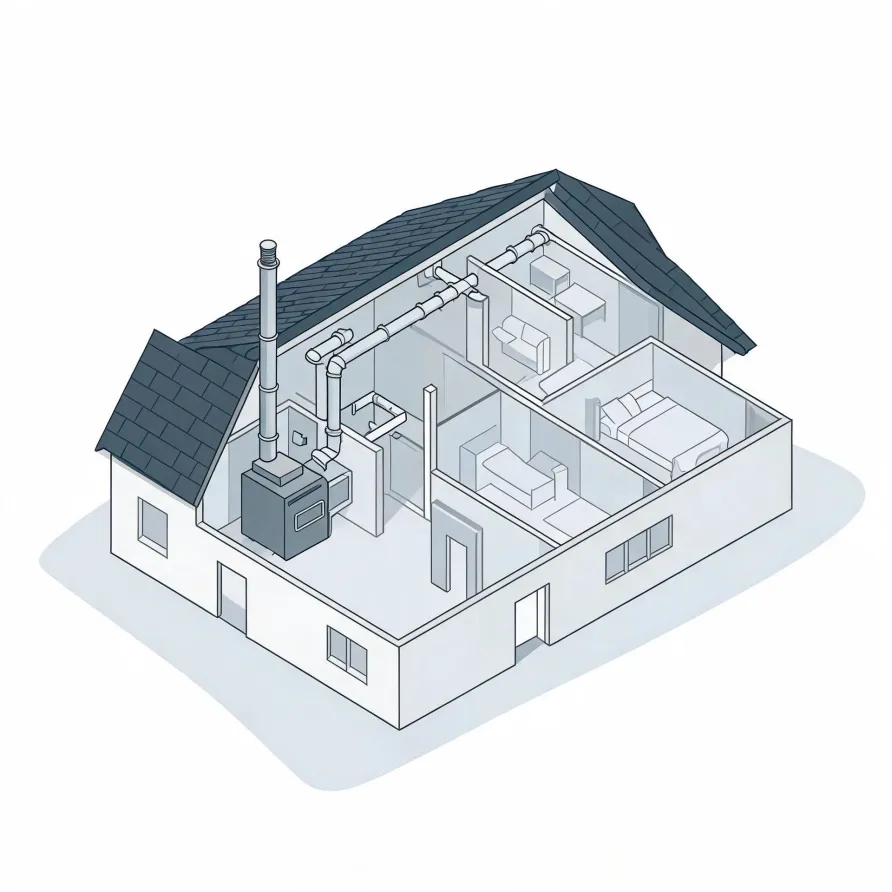
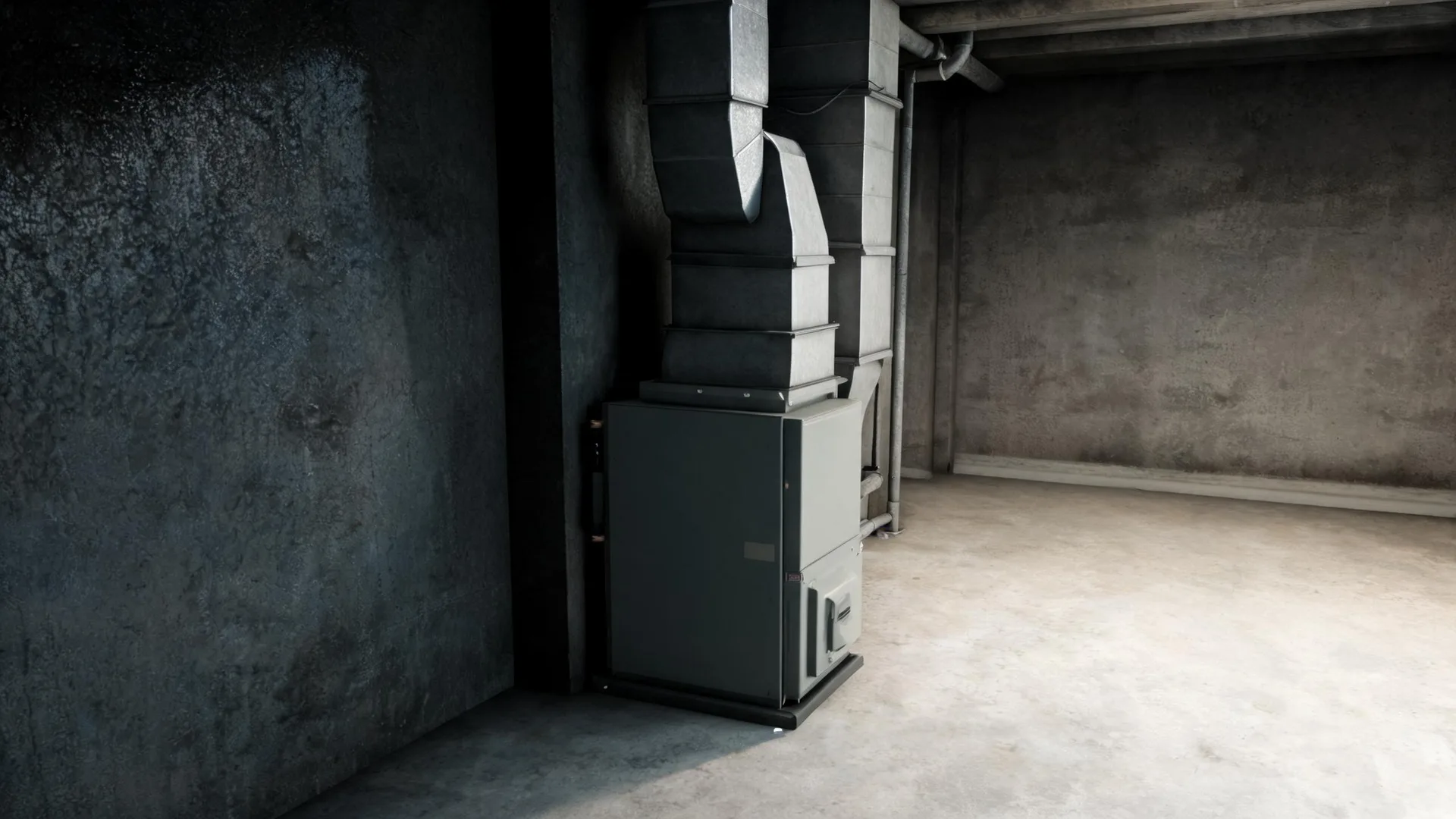
The furnace itself sits in the basement, utility room, or closet and is the heart of the system. Inside it, the heat exchanger transfers combustion heat to your air supply, and a cracked or corroded exchanger is one of the first things a contractor looks at when a furnace is underperforming or throwing a fault code. The burners, which sit just below the exchanger, are another early suspect when ignition is weak or the flame is uneven.
The blower motor and its fan wheel sit at the base of the furnace cabinet and push conditioned air into the supply side of your home. The draft inducer motor pulls combustion gases out through the flue, and the control board ties every component together by reading sensors and directing the sequence of operation. When a furnace misbehaves, the contractor works through these pieces systematically to find where the failure originates.
The drawing shows a typical furnace layout, and a licensed contractor determines which components apply to the specific equipment and configuration in your home.
Get matched in Pike CountyPike County, by the numbers
62 severe weather events were recorded in Pike County, Illinois between 2015 and 2024.
NOAA National Centers for Environmental Information, Storm Events Database, bulk CSV export, events 2015-01-01 through 2024-12-31.Half the homes in Pike County, Illinois were built in 1961 or earlier (2020-2024 ACS 5-year).
U.S. Census Bureau, 2020-2024 American Community Survey 5-Year EstimatesPike County, Illinois holds 7,273 housing units (2020-2024 ACS 5-year).
U.S. Census Bureau, 2020-2024 American Community Survey 5-Year EstimatesOwners occupy 77.7% of the occupied homes in Pike County, Illinois (2020-2024 ACS 5-year).
U.S. Census Bureau, 2020-2024 American Community Survey 5-Year EstimatesCodes & Standards Covering Furnace Repair in Pike County, Illinois5 sourced rules and standards
What Happens When a Contractor Comes Out
Non-weatherized gas furnaces manufactured on or after November 19, 2015 must reach 80.0 percent AFUE.
Non-weatherized oil-fired furnaces manufactured on or after November 19, 2015 must reach 83.0 percent AFUE.
Mobile home gas furnaces manufactured on or after November 19, 2015 must reach 80.0 percent AFUE.
Non-weatherized gas furnaces manufactured on or after December 18, 2028 must reach 95.0 percent AFUE, up from the 80.0 percent minimum that applies to units manufactured before that date.
Licensing Rules for HVAC Repair in Pike County, Illinois
Illinois leaves HVAC licensing to the municipality: state law lets the corporate authorities of each city or village examine, license and regulate heating, air conditioning and refrigeration contractors, and caps the licence fee they may charge at $50 — so who licenses you depends on the town you work in.
Severe Weather Events in Pike County
Extreme weather puts real stress on furnace equipment, and Pike County's climate is the baseline every local unit works against. Repair needs here are shaped by local conditions, which is why that record belongs on this page.
62 severe weather events, 2015–2024. Source: NOAA National Centers for Environmental Information, Storm Events Database.