Tell us about the job
Takes about a minute. No obligation.
A furnace repair call in Pulaski County starts with what the system has been through, not what the season looked like. 69 severe weather events were recorded in Pulaski County, Illinois between 2015 and 2024. At that rate, severe weather is a periodic fact of life here, not a constant one, so a cracked heat exchanger or a failed inducer motor is more likely to trace back to the age of the unit or how consistently it was serviced than to weather load alone. A contractor will check both, but deferred maintenance is where most answers sit.
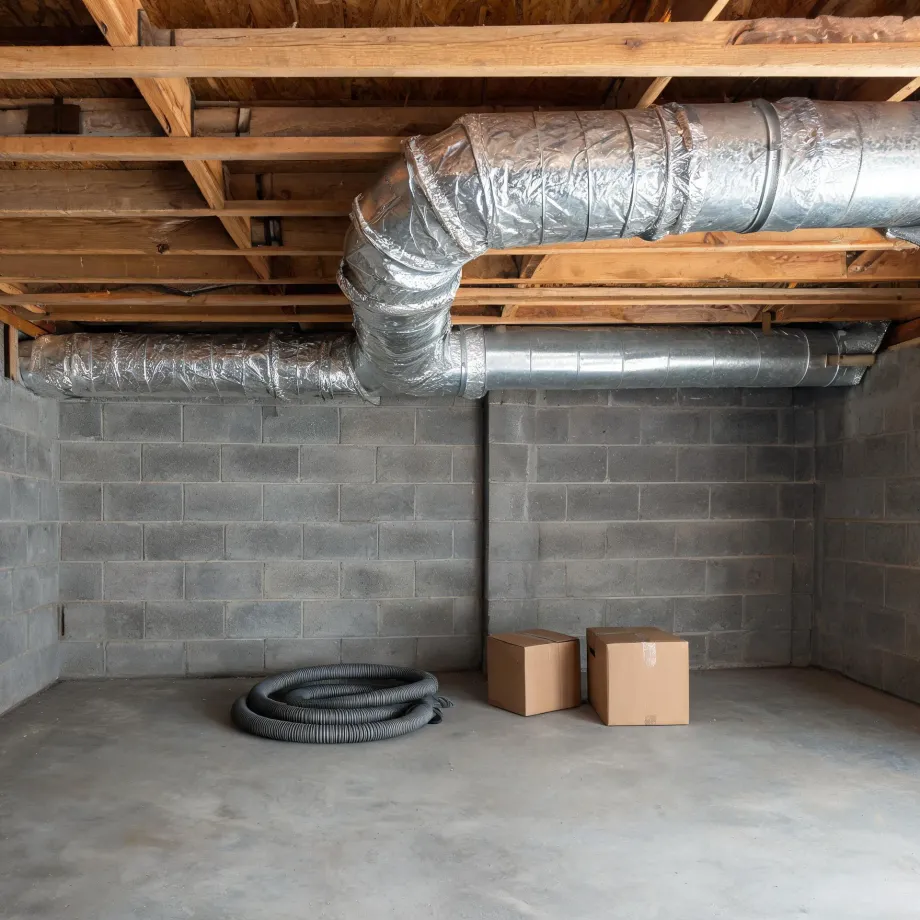
Furnaces in houses this old have typically outlasted at least one generation of parts. Half the homes in Pulaski County, Illinois were built in 1969 or earlier (2020-2024 ACS 5-year). When a contractor opens a unit in stock like this, the question that decides the repair scope is whether the components that system takes are still manufactured or whether the job becomes a hunt through specialty suppliers. A heat exchanger, a draft inducer, a control board from a discontinued product line can turn a straightforward call into a longer one, and that is what the repair quote has to account for before anything else is priced.
The Parts of a Furnace a Contractor Checks First
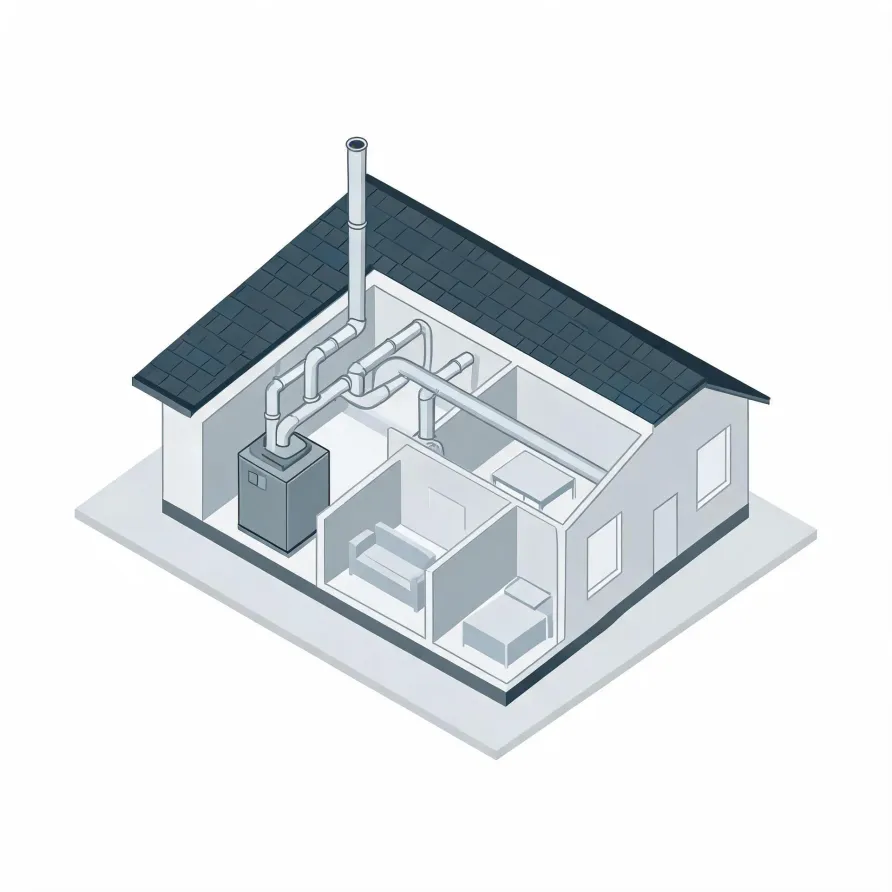
The furnace itself sits in a basement, utility closet, or mechanical room and is the piece a contractor goes to first. Inside it, the heat exchanger is the part most worth understanding: cracks or failures there are what stop a furnace from being safe to run. The burners, which fire inside the heat exchanger, and the igniter, which lights them, are the other components a contractor examines early when a furnace stops heating or won't start.
The blower motor and its fan wheel sit at the base of the furnace cabinet and push conditioned air into the duct system. The flue pipe runs from the furnace up and out of the house, carrying combustion gases away. The control board ties all of it together, reading signals from the thermostat and telling each component when to act.
The drawing shows a typical furnace layout, and a licensed contractor will assess exactly which components apply to the specific system and conditions in your home.
Get matched in Pulaski CountyPulaski County, by the numbers
69 severe weather events were recorded in Pulaski County, Illinois between 2015 and 2024.
NOAA National Centers for Environmental Information, Storm Events Database, bulk CSV export, events 2015-01-01 through 2024-12-31.Half the homes in Pulaski County, Illinois were built in 1969 or earlier (2020-2024 ACS 5-year).
U.S. Census Bureau, 2020-2024 American Community Survey 5-Year EstimatesPulaski County, Illinois holds 2,851 housing units (2020-2024 ACS 5-year).
U.S. Census Bureau, 2020-2024 American Community Survey 5-Year EstimatesOwners occupy 68.2% of the occupied homes in Pulaski County, Illinois (2020-2024 ACS 5-year).
U.S. Census Bureau, 2020-2024 American Community Survey 5-Year EstimatesCodes & Standards Covering Furnace Repair in Pulaski County, Illinois5 sourced rules and standards
What the repair visit looks like
Non-weatherized gas furnaces manufactured on or after November 19, 2015 must reach 80.0 percent AFUE.
Non-weatherized oil-fired furnaces manufactured on or after November 19, 2015 must reach 83.0 percent AFUE.
Mobile home gas furnaces manufactured on or after November 19, 2015 must reach 80.0 percent AFUE.
Non-weatherized gas furnaces manufactured on or after December 18, 2028 must reach 95.0 percent AFUE, up from the 80.0 percent minimum that applies to units manufactured before that date.
Licensing and Legal Requirements in Pulaski County, Illinois
Illinois leaves HVAC licensing to the municipality: state law lets the corporate authorities of each city or village examine, license and regulate heating, air conditioning and refrigeration contractors, and caps the licence fee they may charge at $50 — so who licenses you depends on the town you work in.
Severe Weather Events in Pulaski County
Hard weather puts real stress on furnaces, cycling them through demand spikes, power fluctuations, and extended run times that wear components faster than steady-season use does. That wear is local, tied to what this area's weather actually delivers, which is why the record below is relevant to repair work here.
69 severe weather events, 2015–2024. Source: NOAA National Centers for Environmental Information, Storm Events Database.