Tell us about the job
Takes about a minute. No obligation.
Furnace installation in Henry County is a local problem, not a catalog one. 229 severe weather events were recorded in Henry County, Illinois between 2015 and 2024. At that rate, a contractor has to account for genuine thermal stress when selecting equipment capacity and specifying the installation, because a system undersized or sloppily set up here will be pushed against its limits on a regular basis. Duct sealing, venting placement, and equipment ratings are not afterthoughts.
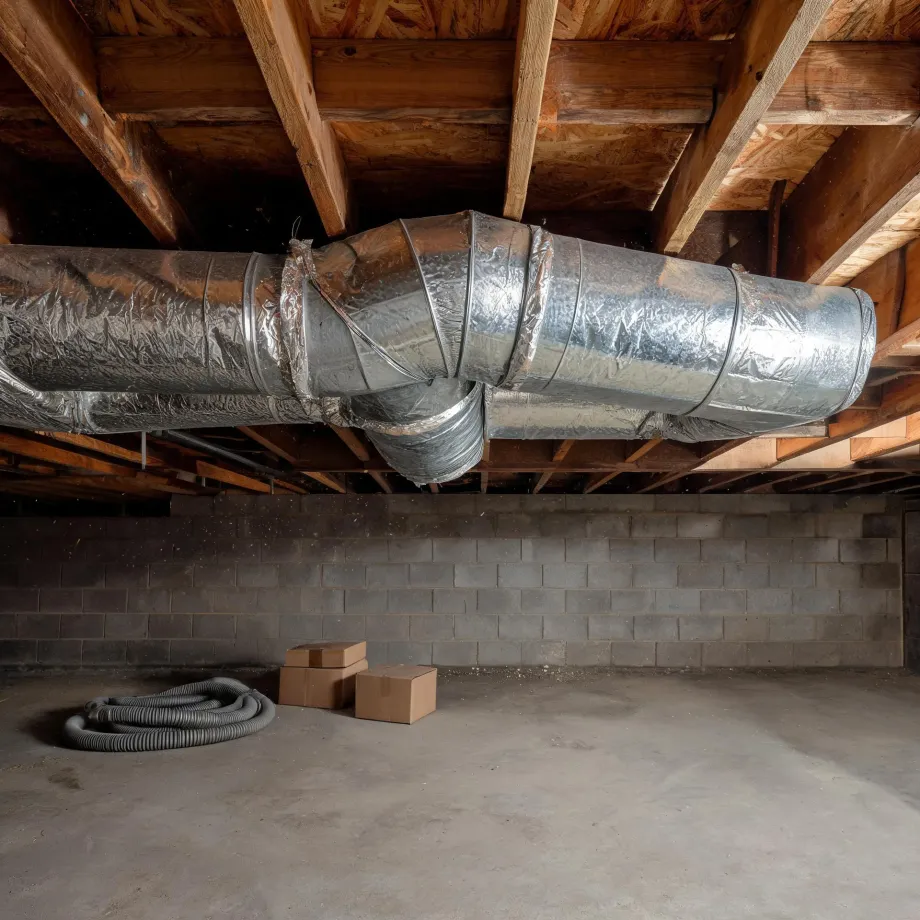
Ductwork laid down for an older furnace carries assumptions about airflow, pressure, and routing that a new unit may not share. Half the homes in Henry County, Illinois were built in 1961 or earlier (2020-2024 ACS 5-year). That gap between what is in the walls and what a new system needs is where a furnace installation either stays simple or expands into rebalancing, resizing, or rerouting runs before the new unit can be commissioned correctly. A contractor evaluating a job in this county sizes the ductwork against the new equipment, not against what the old furnace asked of it.
What Gets Installed With a New Furnace
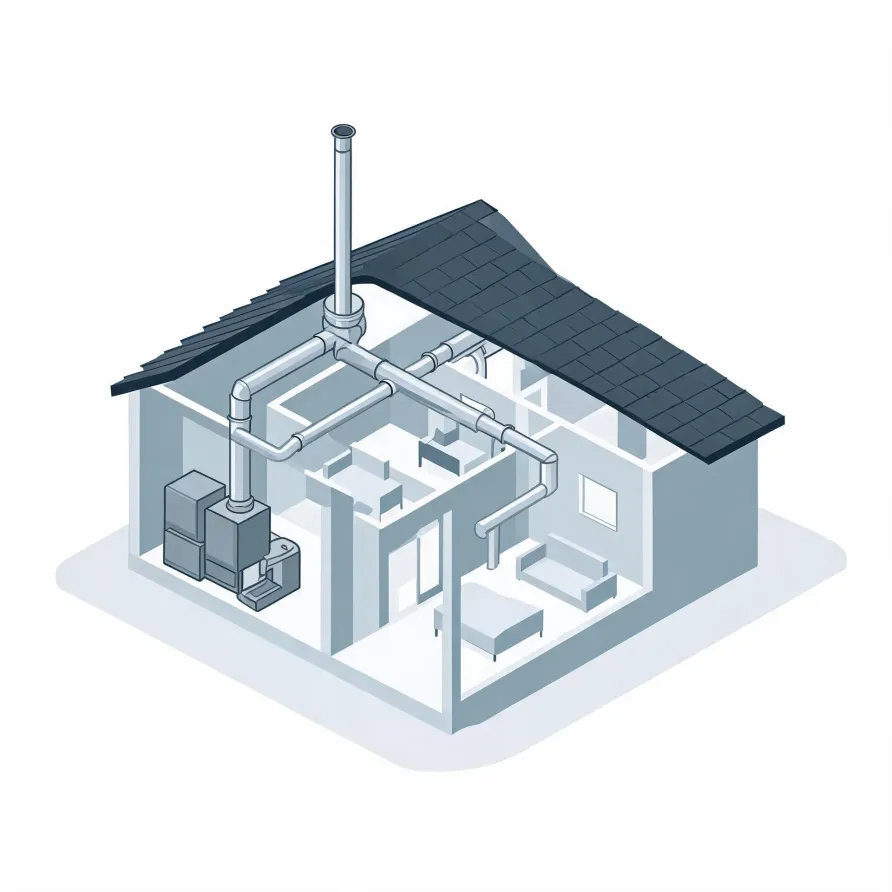
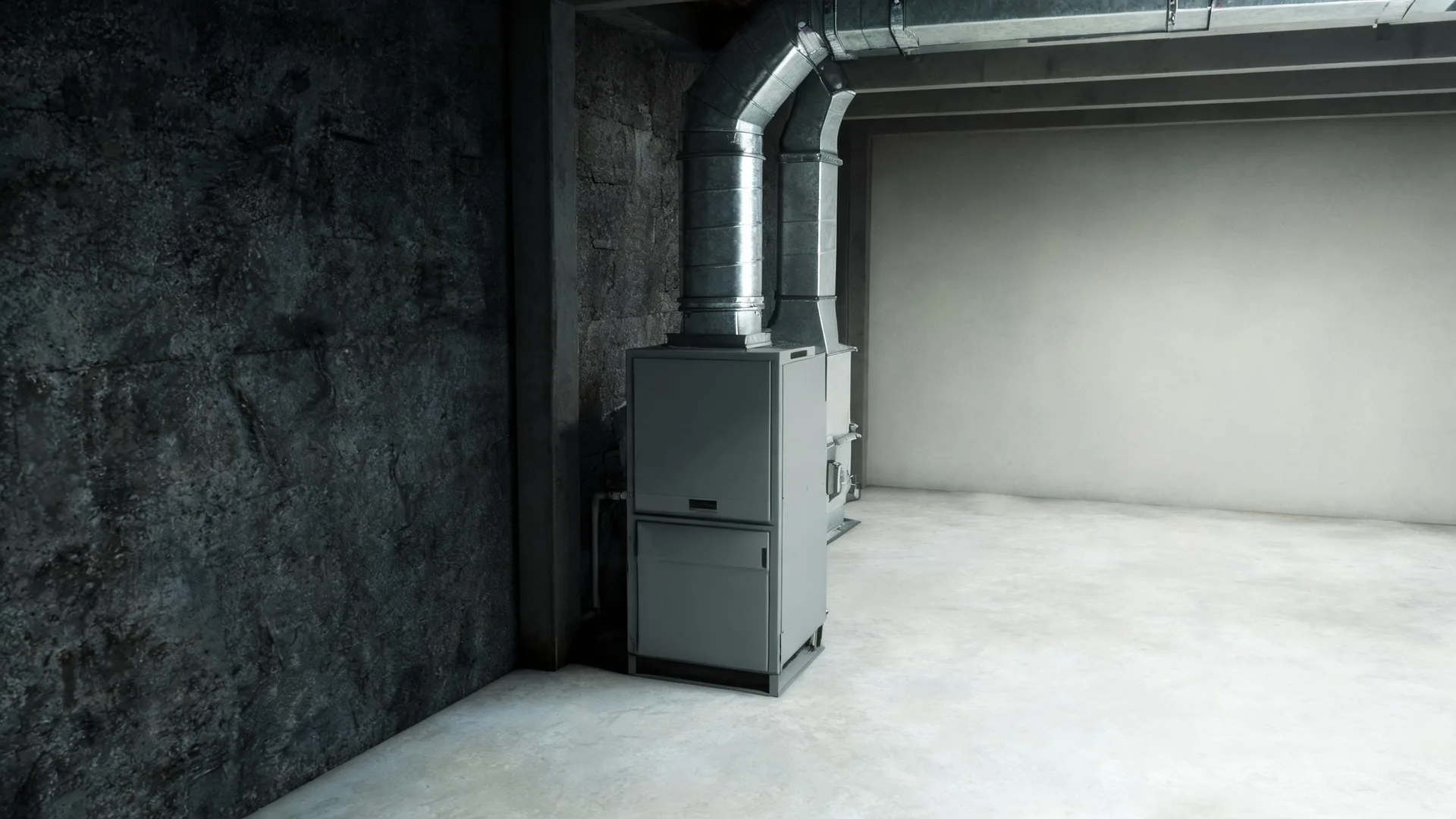
The furnace itself sits in a mechanical room, basement, or utility closet and is the unit a homeowner is most likely to recognize on sight. It holds the heat exchanger, the burner assembly, and the blower motor inside a single cabinet. A contractor mounts it on the floor with clearance on all sides for access and airflow.
The flue pipe runs from the furnace cabinet up through the house and out through the roof or an exterior wall, carrying combustion gases outside. The thermostat goes on an interior wall where it reads the air temperature of the living space and tells the furnace when to fire. A new furnace also receives a gas line connection at the cabinet, fitted and pressure-tested before the unit runs.
The drawing shows a typical layout, and a licensed contractor determines exactly what applies to this house and its existing setup.
Get matched in Henry CountyHenry County, by the numbers
229 severe weather events were recorded in Henry County, Illinois between 2015 and 2024.
NOAA National Centers for Environmental Information, Storm Events Database, bulk CSV export, events 2015-01-01 through 2024-12-31.Half the homes in Henry County, Illinois were built in 1961 or earlier (2020-2024 ACS 5-year).
U.S. Census Bureau, 2020-2024 American Community Survey 5-Year EstimatesHenry County, Illinois holds 22,210 housing units (2020-2024 ACS 5-year).
U.S. Census Bureau, 2020-2024 American Community Survey 5-Year EstimatesOwners occupy 79.9% of the occupied homes in Henry County, Illinois (2020-2024 ACS 5-year).
U.S. Census Bureau, 2020-2024 American Community Survey 5-Year EstimatesFurnace Installation Rules for Henry County, Illinois5 codes, standards, and licensing rules
What happens when a contractor comes out to your home
Non-weatherized gas furnaces manufactured on or after November 19, 2015 must reach 80.0 percent AFUE.
Non-weatherized oil-fired furnaces manufactured on or after November 19, 2015 must reach 83.0 percent AFUE.
Mobile home gas furnaces manufactured on or after November 19, 2015 must reach 80.0 percent AFUE.
Non-weatherized gas furnaces manufactured on or after December 18, 2028 must reach 95.0 percent AFUE, up from the 80.0 percent minimum that applies to units manufactured before that date.
Licensing and Legal Requirements in Henry County, Illinois
Illinois leaves HVAC licensing to the municipality: state law lets the corporate authorities of each city or village examine, license and regulate heating, air conditioning and refrigeration contractors, and caps the licence fee they may charge at $50 — so who licenses you depends on the town you work in.
Severe Weather Events in Henry County
Heating equipment in Henry County works against whatever the local climate throws at it, and that workload is shaped by how often severe weather hits. A furnace sized and installed for this area accounts for that pressure, which is why local installation work is a different calculation than a generic one.
229 severe weather events, 2015–2024. Source: NOAA National Centers for Environmental Information, Storm Events Database.