Tell us about the job
Takes about a minute. No obligation.
A furnace repair in Hamilton County starts with what the system has been through, not with what the homeowner suspects. 77 severe weather events were recorded in Hamilton County, Illinois between 2015 and 2024. At that rate, severe weather is a periodic fact of life here, not a constant one. A unit that has been running for years and finally quits is more likely showing the limits of its age or how it was originally set up than carrying the scars of every storm season. A contractor will check heat exchangers, ignition components, and airflow before reaching for weather as the reason.
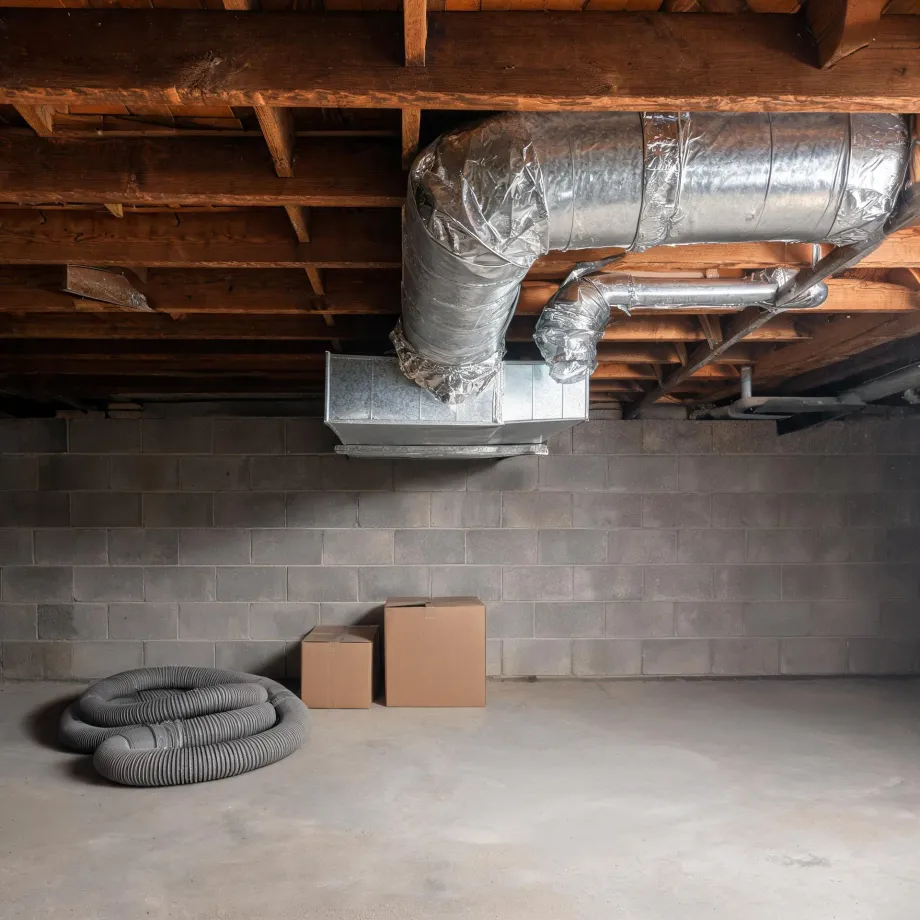
Furnaces in houses this old carry a history that a contractor reads part by part once the unit is open. Half the homes in Hamilton County, Illinois were built in 1970 or earlier (2020-2024 ACS 5-year). That means a lot of equipment running in Hamilton County today was installed into a house that was already well into its life when the system went in, and what got done between the original build and that installation is often invisible until a panel comes off. Heat exchangers crack, burners corrode in ways tied to how a specific house has been heated and sealed over the years, and a failed part may predate the model numbers still in the manufacturer's catalog.
The Parts of a Furnace a Contractor Checks First
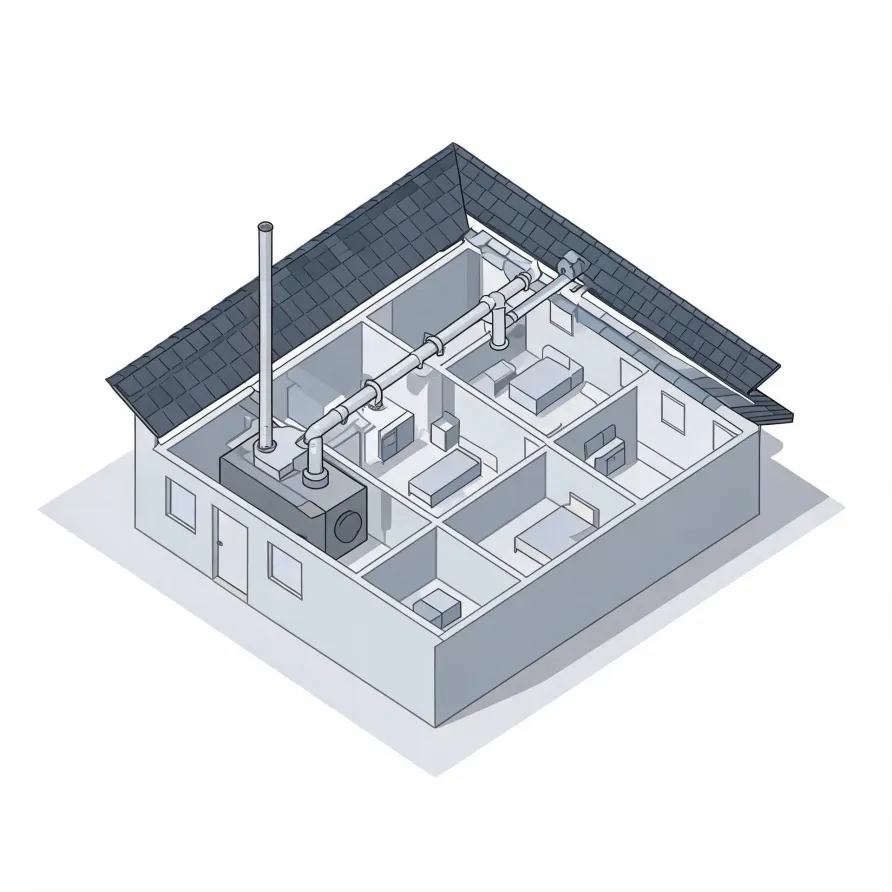
The heat exchanger sits at the core of the furnace cabinet in the basement or utility room, and it is the piece a contractor looks at closely when a furnace is producing no heat or producing heat that smells wrong. The burners, which fire inside it, and the igniter, which lights the burners, are common starting points when the furnace fails to start at all.
The blower motor and its fan wheel sit in the lower half of the cabinet and push conditioned air out through the supply side of the duct system. The flue pipe runs from the top of the cabinet to an exterior vent, and the control board ties every other component together, so a fault in either one can show up as symptoms anywhere in the system.
The drawing shows the general layout of a furnace system, and a licensed contractor determines which components apply and what condition they are in for your specific home.
Get matched in Hamilton CountyHamilton County, Illinois, by the numbers
77 severe weather events were recorded in Hamilton County, Illinois between 2015 and 2024.
NOAA National Centers for Environmental Information, Storm Events Database, bulk CSV export, events 2015-01-01 through 2024-12-31.Half the homes in Hamilton County, Illinois were built in 1970 or earlier (2020-2024 ACS 5-year).
U.S. Census Bureau, 2020-2024 American Community Survey 5-Year EstimatesHamilton County, Illinois holds 3,803 housing units (2020-2024 ACS 5-year).
U.S. Census Bureau, 2020-2024 American Community Survey 5-Year EstimatesOwners occupy 76.4% of the occupied homes in Hamilton County, Illinois (2020-2024 ACS 5-year).
U.S. Census Bureau, 2020-2024 American Community Survey 5-Year EstimatesCodes & Standards Behind Furnace Repair in Hamilton County, Illinois5 sourced rules & standards
What the repair visit looks like
Non-weatherized gas furnaces manufactured on or after November 19, 2015 must reach 80.0 percent AFUE.
Non-weatherized oil-fired furnaces manufactured on or after November 19, 2015 must reach 83.0 percent AFUE.
Mobile home gas furnaces manufactured on or after November 19, 2015 must reach 80.0 percent AFUE.
Non-weatherized gas furnaces manufactured on or after December 18, 2028 must reach 95.0 percent AFUE, up from the 80.0 percent minimum that applies to units manufactured before that date.
Licensing and Legal Requirements in Hamilton County, Illinois
Illinois leaves HVAC licensing to the municipality: state law lets the corporate authorities of each city or village examine, license and regulate heating, air conditioning and refrigeration contractors, and caps the licence fee they may charge at $50 — so who licenses you depends on the town you work in.
Severe Weather Events in Hamilton County
Harsh weather puts direct stress on furnaces, pushing them to run harder and longer than they otherwise would. How often that happens here shapes what repair work looks like in Hamilton County and why local equipment knowledge matters.
77 severe weather events, 2015–2024. Source: NOAA National Centers for Environmental Information, Storm Events Database.