Tell us about the job
Takes about a minute. No obligation.
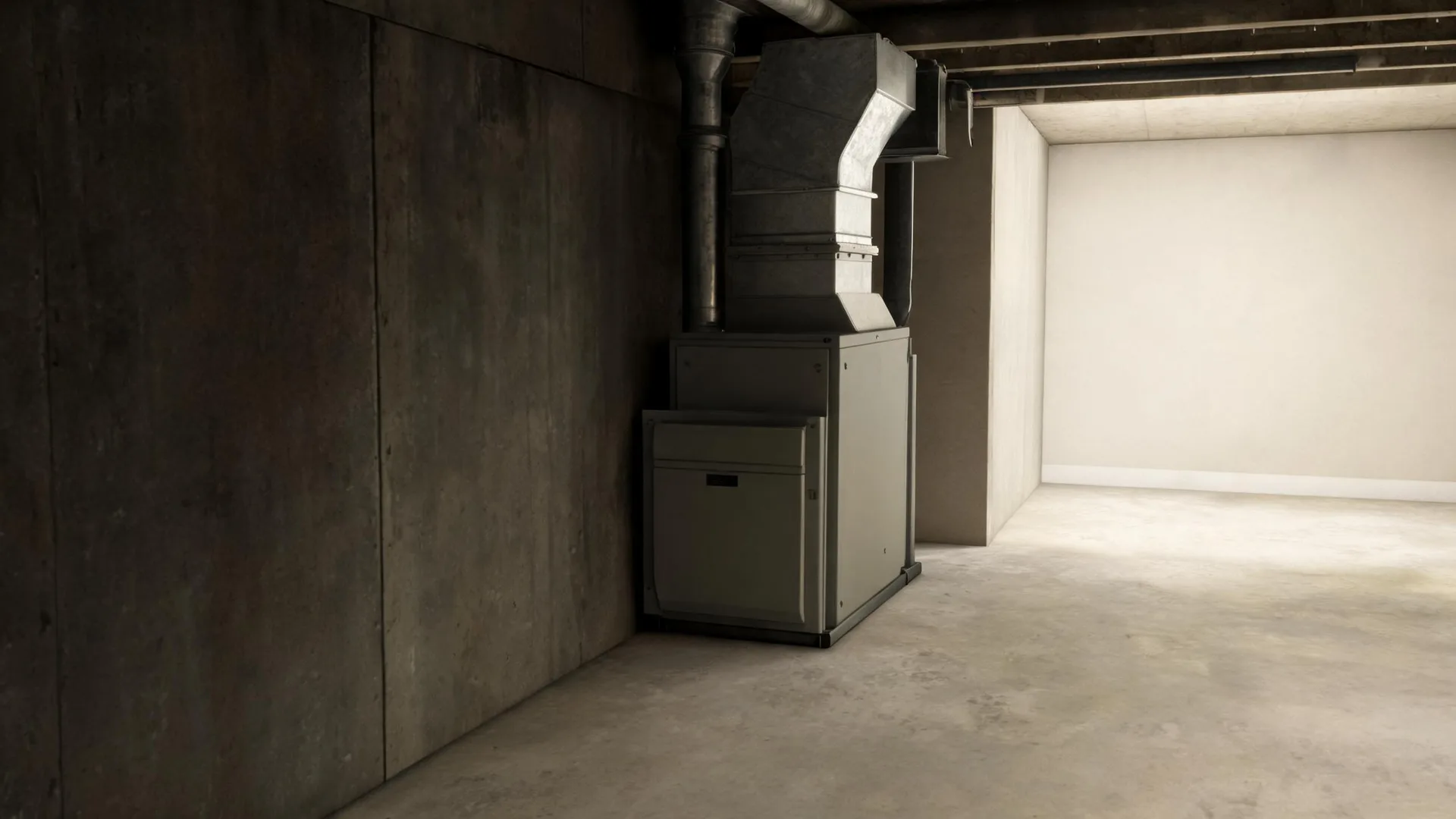
A contractor working a furnace repair in Williamson County has to account for what the equipment has already been running against before they can say which part failed and why. 151 severe weather events were recorded in Williamson County, Illinois between 2015 and 2024. At that rate, heat exchangers, igniters, and blower motors have been cycling hard through weather stress season after season, and the wear patterns a contractor finds inside the cabinet reflect that. A repair quote that ignores the cumulative load on those parts risks replacing the wrong one.
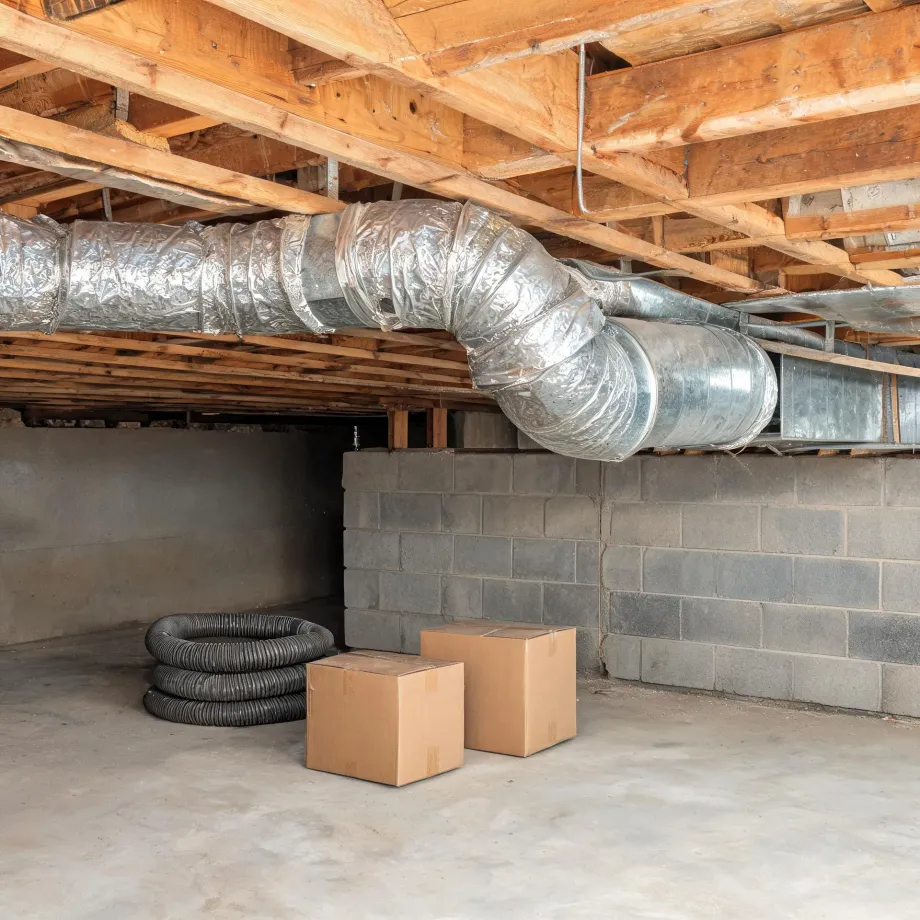
Furnace repair in housing stock this old lands a contractor inside equipment that the parts supply has been slowly leaving behind. Half the homes in Williamson County, Illinois were built in 1981 or earlier (2020-2024 ACS 5-year). Systems installed into houses of that vintage have gone through at least one replacement cycle, and what the opened unit actually contains determines whether a compatible part ships or a broader repair opens up. A heat exchanger or control board in a furnace this age often draws from a catalog that has narrowed considerably, so the diagnosis the contractor writes after opening the unit decides the job more than the symptom that prompted the call.
The Parts of a Furnace a Contractor Checks First
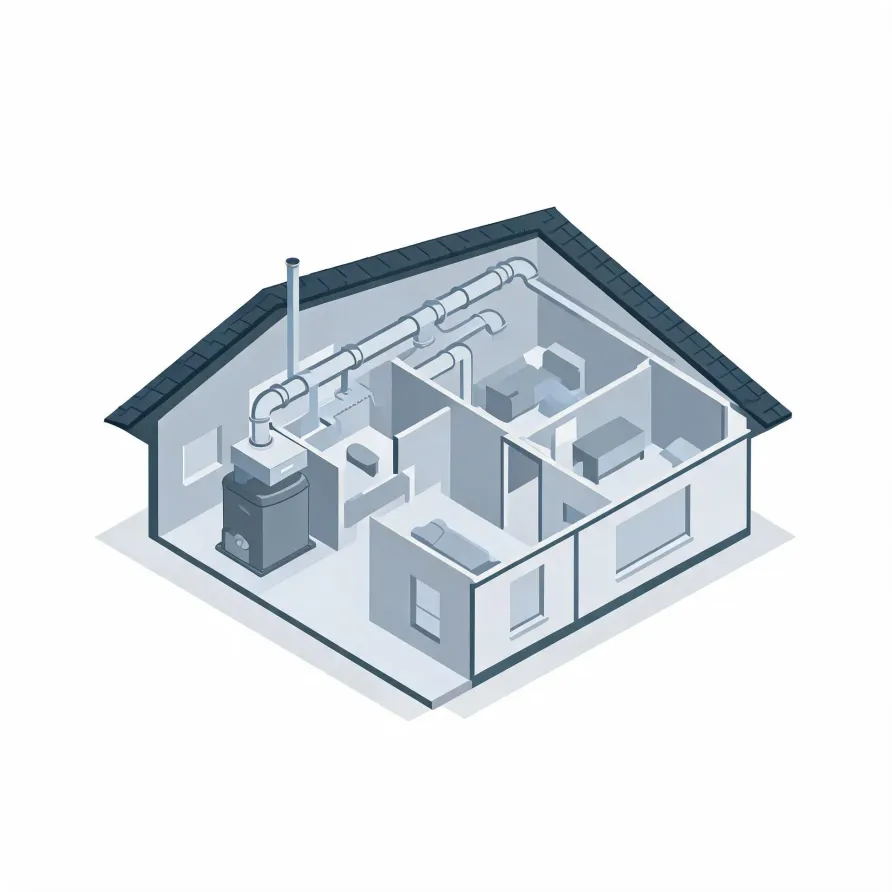
The furnace itself sits in the basement, utility closet, or mechanical room and is the piece a contractor goes to first. Inside it, the heat exchanger does the core work of warming air, and a cracked or corroded exchanger is one of the most serious faults a contractor will find. The burners, which sit just behind the access panel, are another early stop.
The blower motor pushes conditioned air out through the supply side and draws return air back in, so when it fails the whole house goes cold even if the burners are firing fine. The igniter and flame sensor sit near the burners and are common fault points on any service call. The flue pipe runs from the top of the unit to an outside vent and carries combustion gases out of the house.
The drawing shows a typical furnace layout, and a licensed contractor determines which components apply to your specific system and situation.
Get matched in Williamson CountyWilliamson County, by the numbers
151 severe weather events were recorded in Williamson County, Illinois between 2015 and 2024.
NOAA National Centers for Environmental Information, Storm Events Database, bulk CSV export, events 2015-01-01 through 2024-12-31.Half the homes in Williamson County, Illinois were built in 1981 or earlier (2020-2024 ACS 5-year).
U.S. Census Bureau, 2020-2024 American Community Survey 5-Year EstimatesWilliamson County, Illinois holds 32,084 housing units (2020-2024 ACS 5-year).
U.S. Census Bureau, 2020-2024 American Community Survey 5-Year EstimatesOwners occupy 70.7% of the occupied homes in Williamson County, Illinois (2020-2024 ACS 5-year).
U.S. Census Bureau, 2020-2024 American Community Survey 5-Year EstimatesCodes & Standards Governing Furnace Repair in Williamson County, Illinois5 sourced rules & standards
What Furnace Repair Looks Like in Williamson County
Non-weatherized gas furnaces manufactured on or after November 19, 2015 must reach 80.0 percent AFUE.
Non-weatherized oil-fired furnaces manufactured on or after November 19, 2015 must reach 83.0 percent AFUE.
Mobile home gas furnaces manufactured on or after November 19, 2015 must reach 80.0 percent AFUE.
Non-weatherized gas furnaces manufactured on or after December 18, 2028 must reach 95.0 percent AFUE, up from the 80.0 percent minimum that applies to units manufactured before that date.
Licensing and Legal Requirements in Williamson County, Illinois
Illinois leaves HVAC licensing to the municipality: state law lets the corporate authorities of each city or village examine, license and regulate heating, air conditioning and refrigeration contractors, and caps the licence fee they may charge at $50 — so who licenses you depends on the town you work in.
Severe Weather Events in Williamson County
Extreme weather puts real strain on furnace systems, forcing them to cycle harder and wear faster than they would under mild conditions. How much of that load a furnace carries depends on where it sits, which makes local weather history a practical input for anyone deciding when and how to service heating equipment in Williamson County.
151 severe weather events, 2015–2024. Source: NOAA National Centers for Environmental Information, Storm Events Database.