Tell us about the job
Takes about a minute. No obligation.
A contractor quoting a furnace repair in Logan County has to weigh what the system has been carrying against what is simply old or worn. 131 severe weather events were recorded in Logan County, Illinois between 2015 and 2024. At roughly that pace, severe weather is a real but not dominant factor in how heating equipment here degrades. Heat exchangers crack from cycles, not storms. Burners and igniters fail on age and on how well the system was maintained, and in most repair calls here those are the first things a contractor examines, not weather exposure.
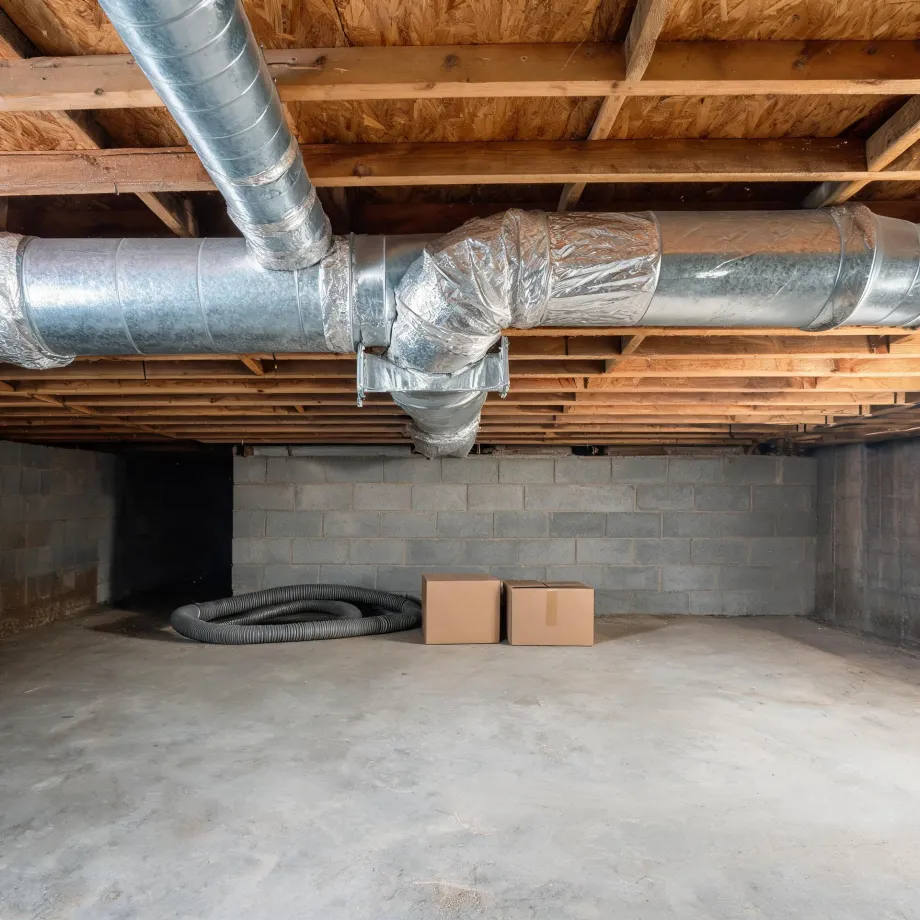
Ductwork and wiring in a house this old were set up for whatever equipment came before the current furnace, and each replacement since worked around what was already there. Half the homes in Logan County, Illinois were built in 1964 or earlier (2020-2024 ACS 5-year). When a contractor opens a furnace that has lived inside that history, what they find on the bench decides the job: a heat exchanger or control board from a system several generations back may have no current-production equivalent, which pushes the repair toward fabrication, substitution, or a conversation about replacement. The age of the structure is not the constraint. The parts list is.
The Parts of a Furnace a Contractor Checks First
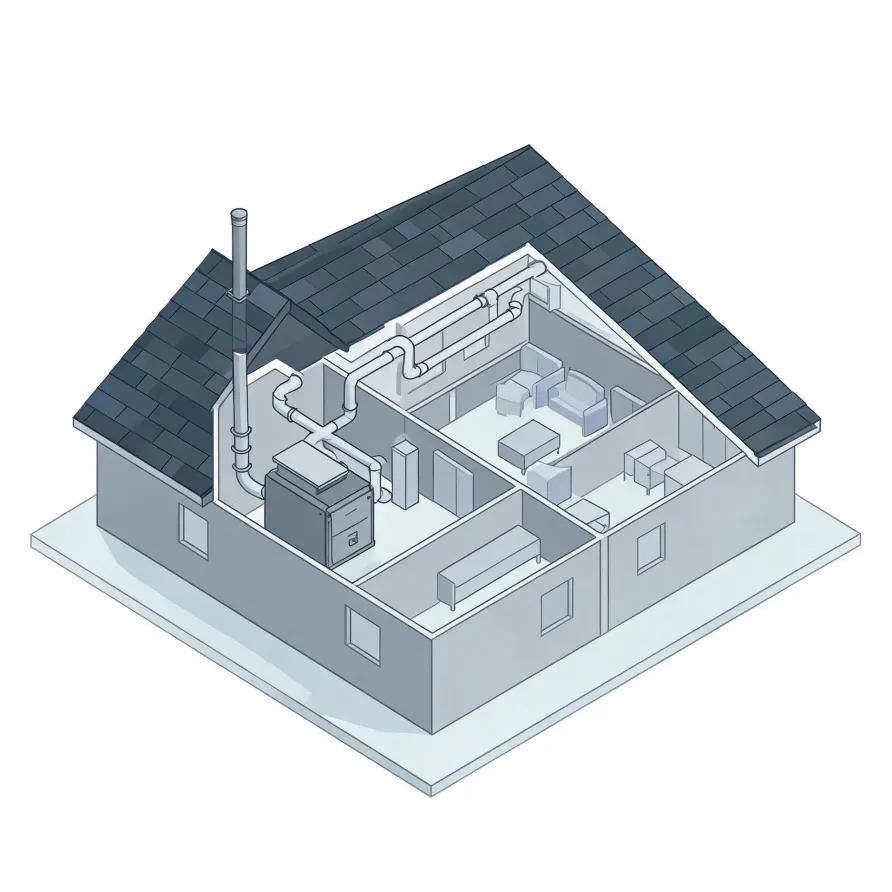
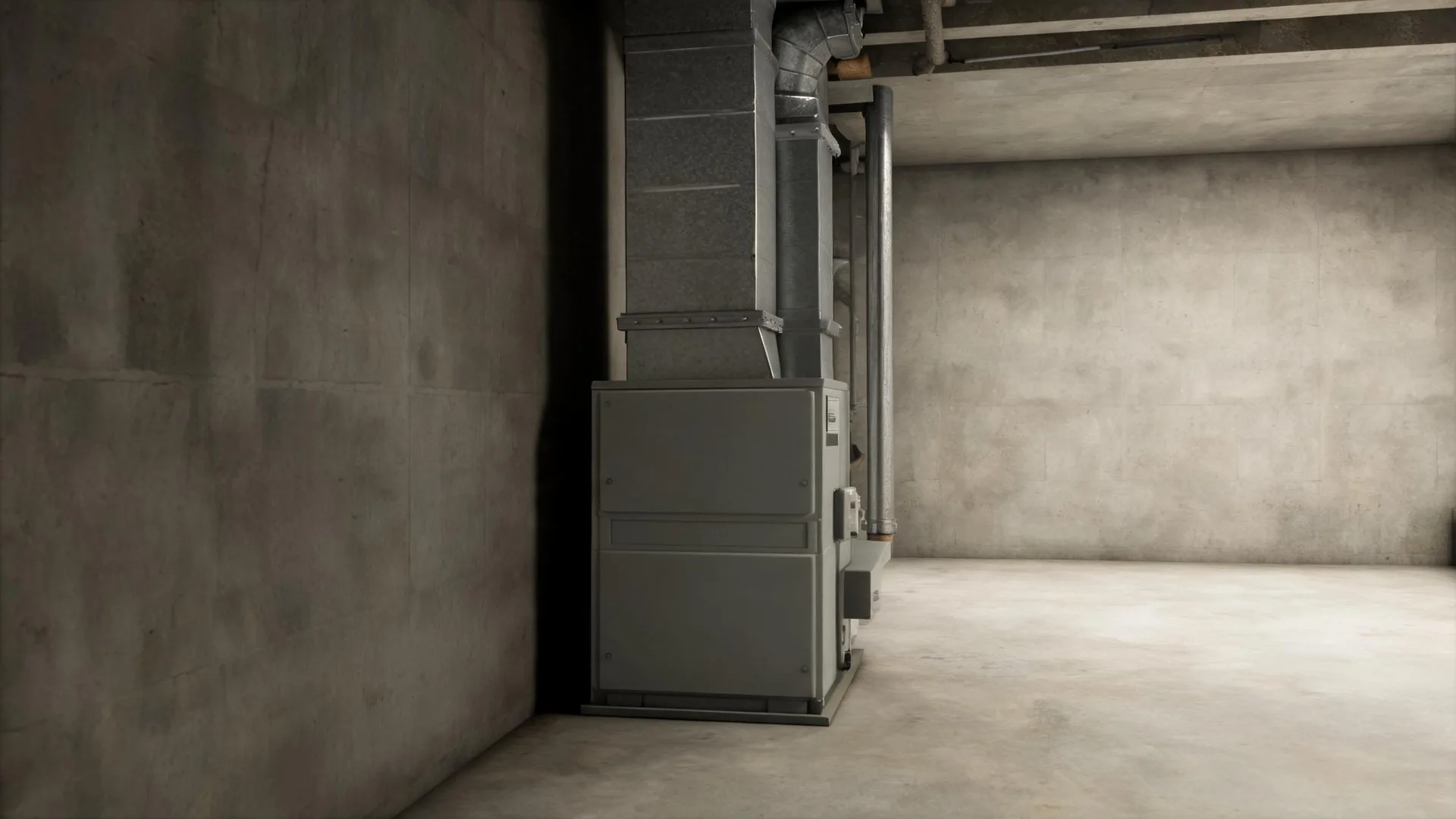
The furnace itself sits in the basement, utility room, or closet and is the first thing a contractor looks at. Inside it, the heat exchanger and burner assembly are common failure points: a cracked heat exchanger stops the furnace from running safely, and a faulty burner means the fuel never lights properly. The blower motor, which pushes conditioned air out of the unit, gets checked early too.
The flue pipe runs from the furnace up and out of the house, carrying combustion gases away, and a blockage or breach there can shut the whole system down. The thermostat and the control board sit at opposite ends of the signal chain, and when either one misbehaves the furnace behaves as though the bigger mechanical parts have failed, so both get ruled out before a contractor goes further.
The drawing shows the general layout of a furnace system, and a licensed contractor determines which parts apply and what condition they are in for your specific home.
Get matched in Logan CountyLogan County, Illinois, by the numbers
131 severe weather events were recorded in Logan County, Illinois between 2015 and 2024.
NOAA National Centers for Environmental Information, Storm Events Database, bulk CSV export, events 2015-01-01 through 2024-12-31.Half the homes in Logan County, Illinois were built in 1964 or earlier (2020-2024 ACS 5-year).
U.S. Census Bureau, 2020-2024 American Community Survey 5-Year EstimatesLogan County, Illinois holds 11,967 housing units (2020-2024 ACS 5-year).
U.S. Census Bureau, 2020-2024 American Community Survey 5-Year EstimatesOwners occupy 68.5% of the occupied homes in Logan County, Illinois (2020-2024 ACS 5-year).
U.S. Census Bureau, 2020-2024 American Community Survey 5-Year EstimatesCodes & Standards Governing Furnace Repair in Logan County, Illinois5 sourced rules & standards
What the Repair Visit Looks Like
Non-weatherized gas furnaces manufactured on or after November 19, 2015 must reach 80.0 percent AFUE.
Non-weatherized oil-fired furnaces manufactured on or after November 19, 2015 must reach 83.0 percent AFUE.
Mobile home gas furnaces manufactured on or after November 19, 2015 must reach 80.0 percent AFUE.
Non-weatherized gas furnaces manufactured on or after December 18, 2028 must reach 95.0 percent AFUE, up from the 80.0 percent minimum that applies to units manufactured before that date.
Licensing and Legal Requirements in Logan County, Illinois
Illinois leaves HVAC licensing to the municipality: state law lets the corporate authorities of each city or village examine, license and regulate heating, air conditioning and refrigeration contractors, and caps the licence fee they may charge at $50 — so who licenses you depends on the town you work in.
Severe Weather Events in Logan County
Hard weather puts real load on furnaces: temperature swings, power disruptions, and extended run times all add up. How often that happens in Logan County shapes how hard local equipment has to work and how often it needs attention.
131 severe weather events, 2015–2024. Source: NOAA National Centers for Environmental Information, Storm Events Database.