Tell us about the job
Takes about a minute. No obligation.
A furnace repair in Will County starts with a question a contractor has to answer before writing a quote: how much of what failed is weather load, and how much is age and maintenance history? 346 severe weather events were recorded in Will County, Illinois between 2015 and 2024. At that rate, severe weather is a standing condition here, not an occasional one, and it shows up inside equipment. Heat exchangers crack under repeated thermal stress. Blower motors accumulate wear faster when they run hard through storms. A contractor separating those causes prices the job differently than one who does not.
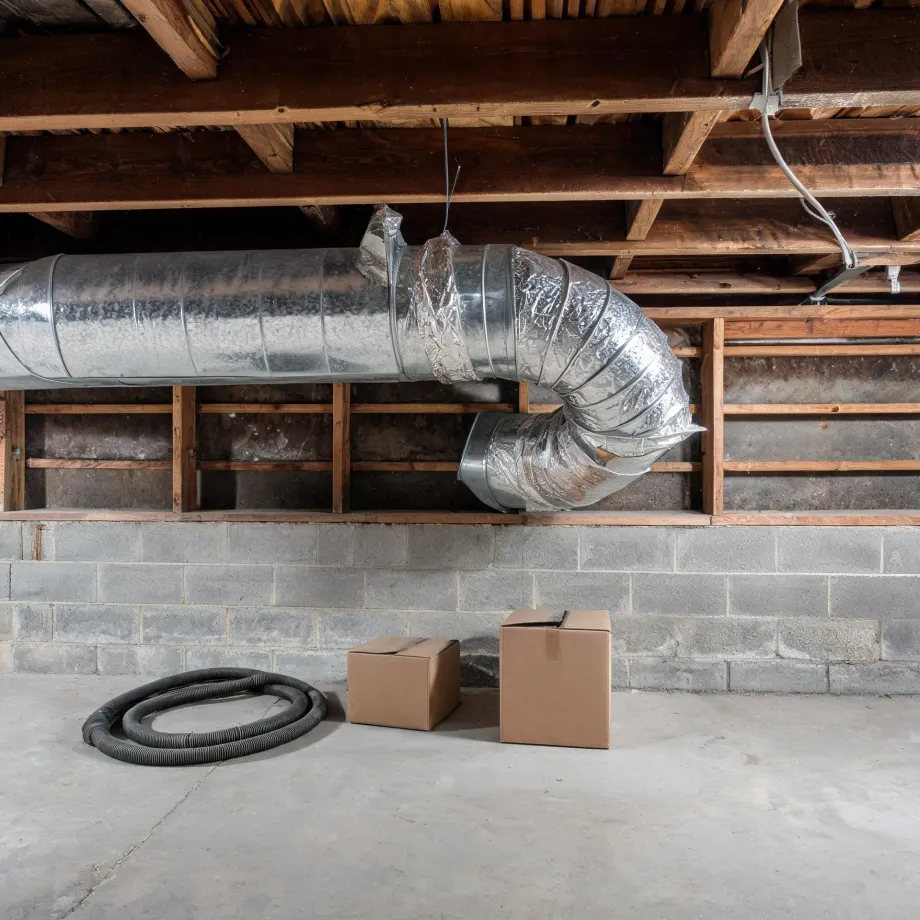
Furnace parts availability is where repair jobs in Will County get complicated. Half the homes in Will County, Illinois were built in 1992 or earlier (2020-2024 ACS 5-year). A furnace installed in a house built that long ago has often been through at least one replacement already, but the current unit still draws from a parts catalog that thins out as the model ages. What a contractor finds when the heat exchanger or control board comes out determines whether the repair is a same-week fix or a sourcing problem, and that answer depends on what make and model is actually in the house, not on when the house was built.
The Parts of a Furnace a Contractor Checks First
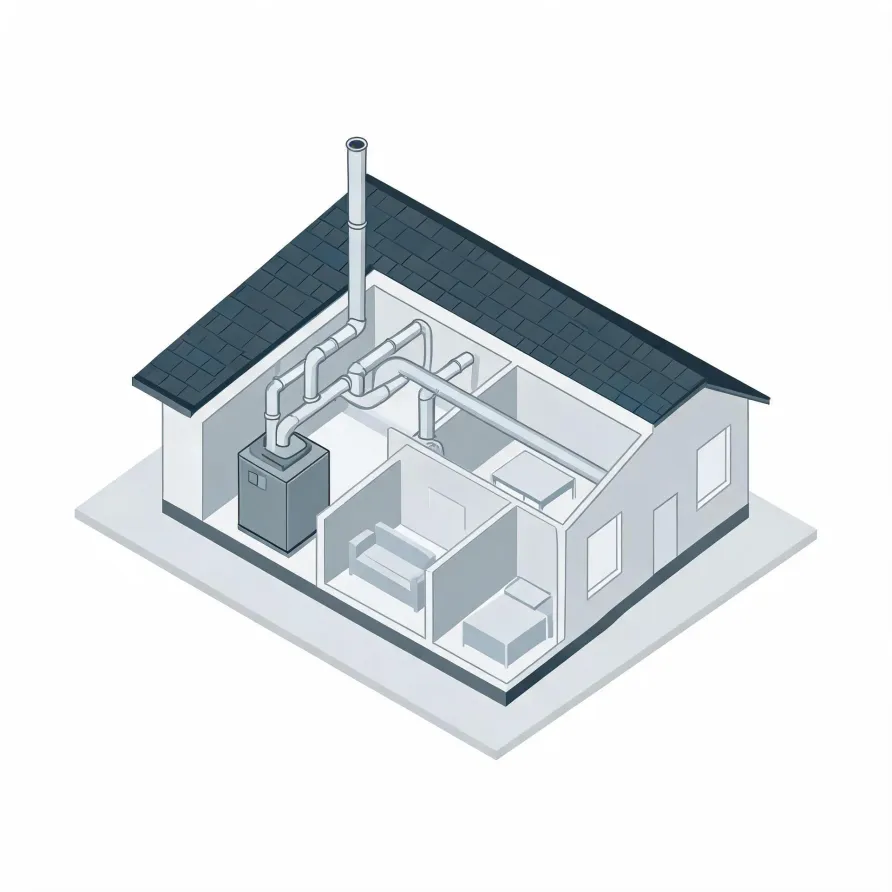
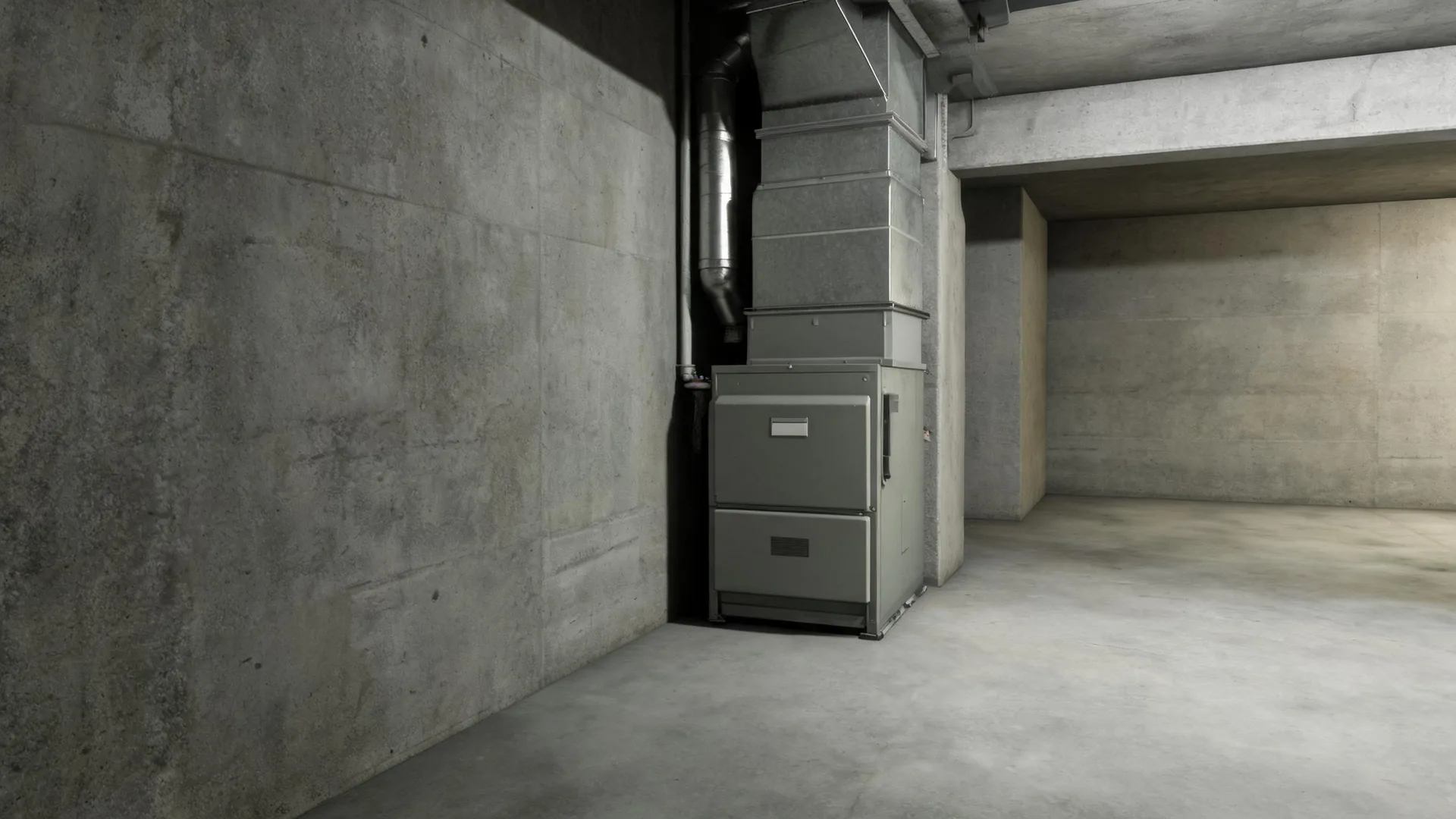
The furnace itself sits in the basement, utility room, or closet and is the heart of the system. Inside it, the heat exchanger is what a contractor looks at hard during a repair call: cracks there let combustion gases into the air supply. The burners, the igniter, and the flame sensor are the other pieces that go wrong most often and that a contractor will test early.
The blower motor and its fan wheel sit at the base of the furnace cabinet and push conditioned air out through the supply side of the system. The flue pipe runs from the top of the furnace to an exterior vent and carries exhaust gases out of the house. The thermostat on the wall is the starting point for any diagnostic, because a wiring fault or failed control board there can mimic a furnace problem.
The drawing shows a typical furnace layout, and a licensed contractor determines which components apply and what work is needed in your specific home.
Get matched in Will CountyWill County, by the numbers
346 severe weather events were recorded in Will County, Illinois between 2015 and 2024.
NOAA National Centers for Environmental Information, Storm Events Database, bulk CSV export, events 2015-01-01 through 2024-12-31.Half the homes in Will County, Illinois were built in 1992 or earlier (2020-2024 ACS 5-year).
U.S. Census Bureau, 2020-2024 American Community Survey 5-Year EstimatesWill County, Illinois holds 254,278 housing units (2020-2024 ACS 5-year).
U.S. Census Bureau, 2020-2024 American Community Survey 5-Year EstimatesOwners occupy 82.8% of the occupied homes in Will County, Illinois (2020-2024 ACS 5-year).
U.S. Census Bureau, 2020-2024 American Community Survey 5-Year EstimatesRules & Standards Behind Furnace Repair in Will County, Illinois5 codes, laws & standards
What the Repair Visit Looks Like
Non-weatherized gas furnaces manufactured on or after November 19, 2015 must reach 80.0 percent AFUE.
Non-weatherized oil-fired furnaces manufactured on or after November 19, 2015 must reach 83.0 percent AFUE.
Mobile home gas furnaces manufactured on or after November 19, 2015 must reach 80.0 percent AFUE.
Non-weatherized gas furnaces manufactured on or after December 18, 2028 must reach 95.0 percent AFUE, up from the 80.0 percent minimum that applies to units manufactured before that date.
Licensing and Legal Requirements in Will County, Illinois
Illinois leaves HVAC licensing to the municipality: state law lets the corporate authorities of each city or village examine, license and regulate heating, air conditioning and refrigeration contractors, and caps the licence fee they may charge at $50 — so who licenses you depends on the town you work in.
Severe Weather Events in Will County
Hard weather puts real hours on a furnace. Every pressure swing, power surge, and hard-freeze recovery asks something of the equipment, and what that adds up to over time is a local question, not a general one.
346 severe weather events, 2015–2024. Source: NOAA National Centers for Environmental Information, Storm Events Database.