Tell us about the job
Takes about a minute. No obligation.
A contractor called out to repair a furnace in Putnam County is working on equipment that has not been run especially hard by the weather. 80 severe weather events were recorded in Putnam County, Illinois between 2015 and 2024. At that rate, severe weather is an occasional event here, not a standing condition, and it does not account for most of what goes wrong with a furnace. Heat exchangers crack from age and cycling. Ignitors fail because they were never replaced. A contractor prices the repair around what they find inside the unit, not around what the sky has thrown at it.
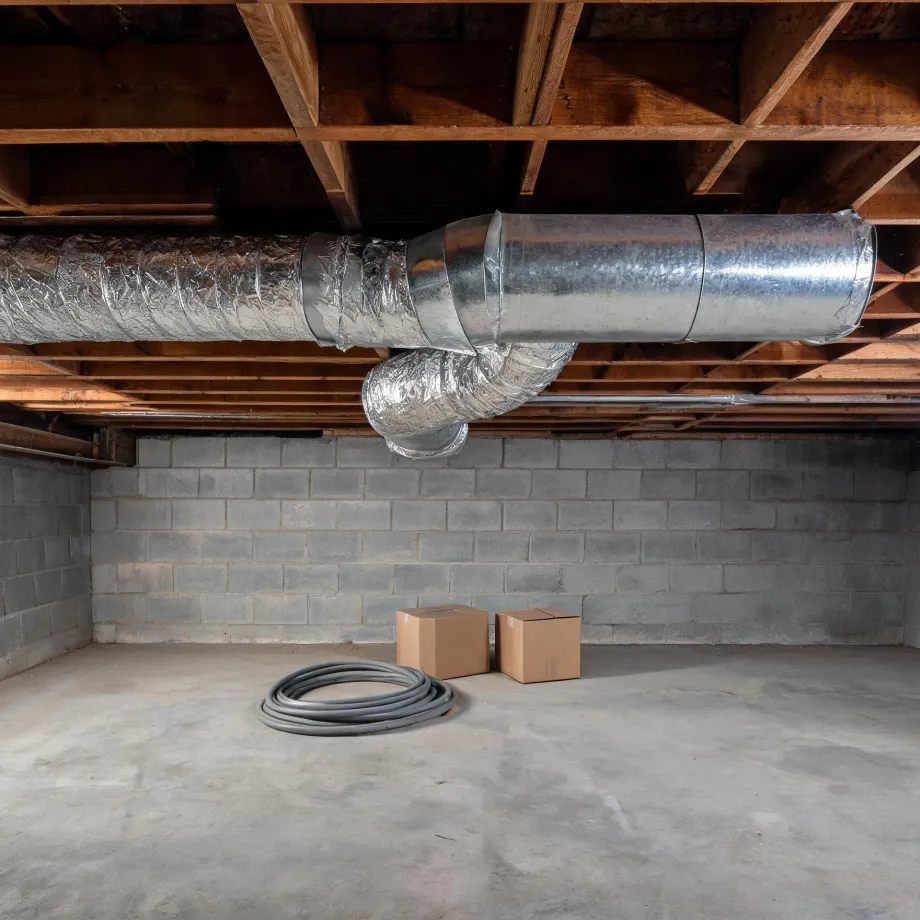
Furnace systems in housing this old are rarely on their original equipment, which means a repair call opens onto a second question the homeowner may not have anticipated: whether parts for what is actually installed are still in production. Half the homes in Putnam County, Illinois were built in 1975 or earlier (2020-2024 ACS 5-year). A contractor who opens a furnace here often finds a unit that was itself a replacement, sourced and installed at some point well after the house went up, and the supply chain for that unit's components depends entirely on which manufacturer made it and when they stopped. If the heat exchanger or control board it takes has been discontinued, the repair scope changes and so does the bill.
The Parts of a Furnace a Contractor Checks First
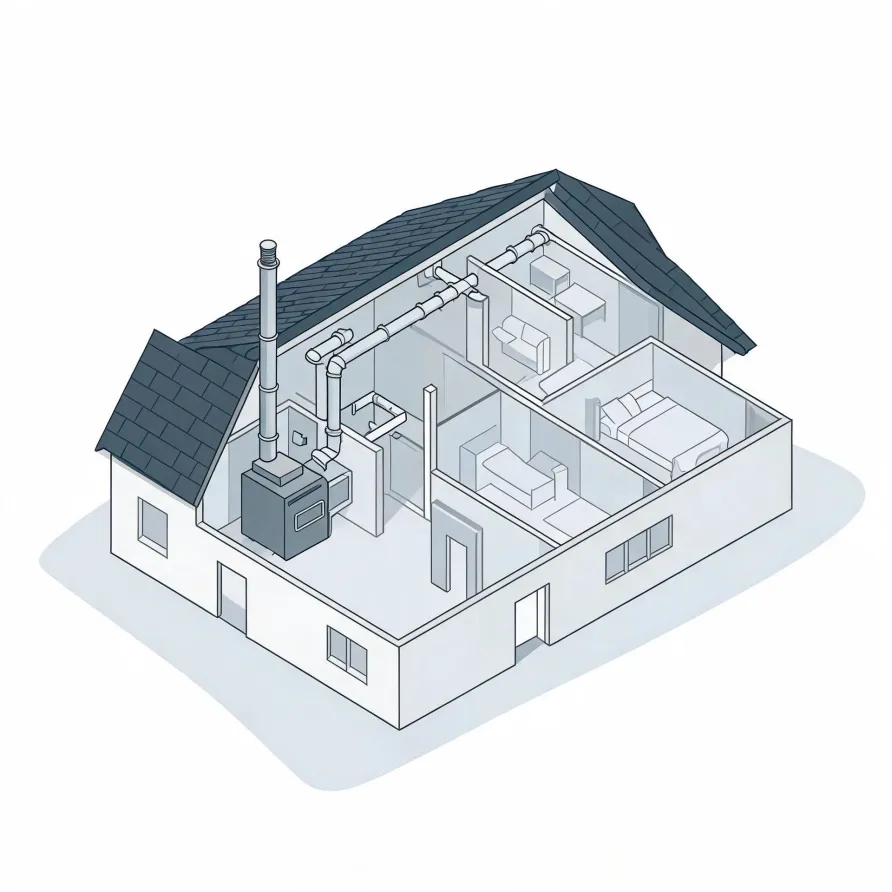
The furnace itself sits in the basement, utility room, or closet and is the first thing a contractor opens up. Inside it, the heat exchanger is what actually warms the air, and a crack or failure there is one of the first things a contractor rules out. The burners, ignitor, and flame sensor all live inside that same cabinet, and any one of them can stop a furnace from firing.
The blower motor and its wheel sit at the base of the furnace and push conditioned air out through the house. The flue pipe runs from the top of the cabinet up and out, carrying combustion gases away, and a contractor checks it for blockages or damage that would back those gases into the living space. The thermostat on the wall is the last piece a contractor tests, since a bad signal there can look like a failed furnace.
The drawing shows a typical furnace layout, and a licensed contractor determines which parts apply to the specific equipment and setup in your home.
Get matched in Putnam CountyPutnam County, by the numbers
80 severe weather events were recorded in Putnam County, Illinois between 2015 and 2024.
NOAA National Centers for Environmental Information, Storm Events Database, bulk CSV export, events 2015-01-01 through 2024-12-31.Half the homes in Putnam County, Illinois were built in 1975 or earlier (2020-2024 ACS 5-year).
U.S. Census Bureau, 2020-2024 American Community Survey 5-Year EstimatesPutnam County, Illinois holds 3,090 housing units (2020-2024 ACS 5-year).
U.S. Census Bureau, 2020-2024 American Community Survey 5-Year EstimatesOwners occupy 81.5% of the occupied homes in Putnam County, Illinois (2020-2024 ACS 5-year).
U.S. Census Bureau, 2020-2024 American Community Survey 5-Year EstimatesCodes & Standards Governing Furnace Repair in Putnam County, Illinois5 sourced rules and standards
What Happens When the Contractor Arrives
Non-weatherized gas furnaces manufactured on or after November 19, 2015 must reach 80.0 percent AFUE.
Non-weatherized oil-fired furnaces manufactured on or after November 19, 2015 must reach 83.0 percent AFUE.
Mobile home gas furnaces manufactured on or after November 19, 2015 must reach 80.0 percent AFUE.
Non-weatherized gas furnaces manufactured on or after December 18, 2028 must reach 95.0 percent AFUE, up from the 80.0 percent minimum that applies to units manufactured before that date.
Licensing and Legal Requirements in Putnam County, Illinois
Illinois leaves HVAC licensing to the municipality: state law lets the corporate authorities of each city or village examine, license and regulate heating, air conditioning and refrigeration contractors, and caps the licence fee they may charge at $50 — so who licenses you depends on the town you work in.
Severe Weather Events in Putnam County
Extreme weather puts real load on heating equipment, and furnaces that cycle hard through rough conditions wear faster and fail sooner. How often that happens in Putnam County is a local fact, and it shapes what repair work looks like here.
80 severe weather events, 2015–2024. Source: NOAA National Centers for Environmental Information, Storm Events Database.