Tell us about the job
Takes about a minute. No obligation.
A furnace install in this area starts with a heat load calculation, and getting that calculation right matters more here than building in extra tolerance for storm wear. 78 severe weather events were recorded in Gallatin County, Illinois between 2015 and 2024. At that rate, severe weather is an occasional fact of life, not a constant operating condition, so a contractor is not sizing up for a system that has been fighting the climate its whole life. What drives the spec here is the house: its insulation, its age, its square footage, and how the ductwork runs. A unit installed to the wrong size will underperform every winter regardless of what the weather outside does.
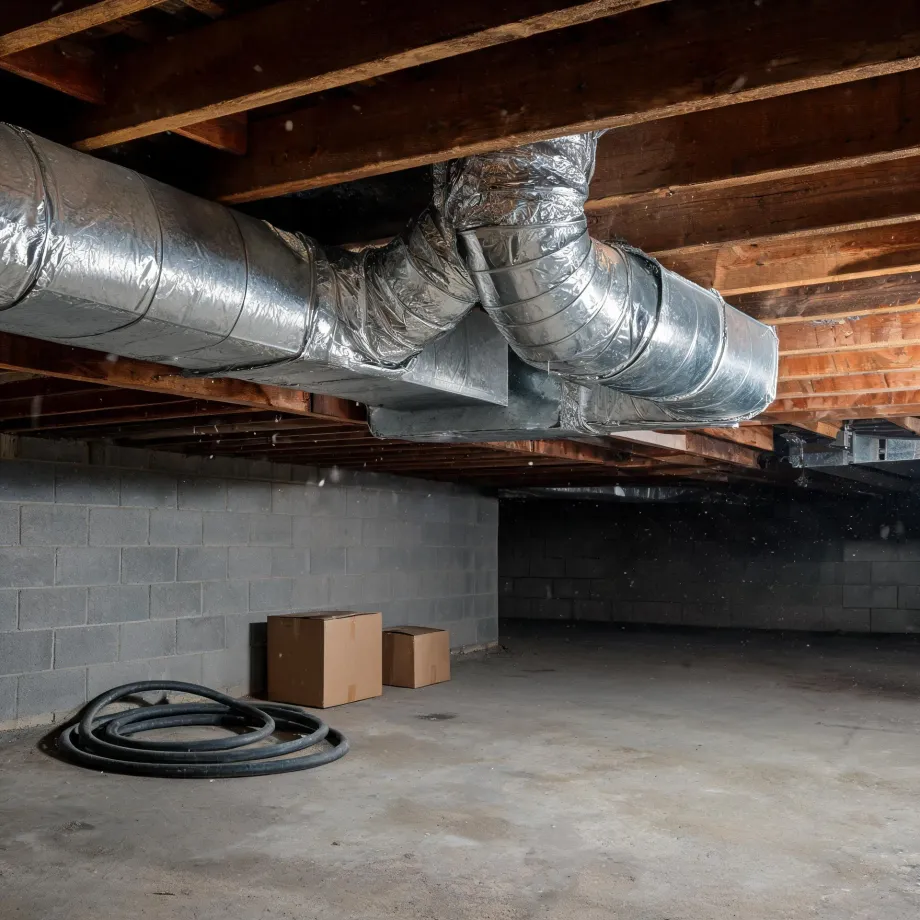
Ductwork laid down for older equipment carries assumptions about airflow, routing, and static pressure that a modern furnace does not share. Half the homes in Gallatin County, Illinois were built in 1969 or earlier (2020-2024 ACS 5-year). A contractor installing a furnace in stock like this measures what the existing duct system actually delivers before anything else, because the ducts that served the previous unit were sized around it, not around what replaces it. Where the runs are undersized or the layout starves certain rooms, that is where the installation scope widens. The electrical panel gets the same early look, since the draw of a new furnace can land differently than what the existing service was wired to handle.
What Gets Installed With a New Furnace
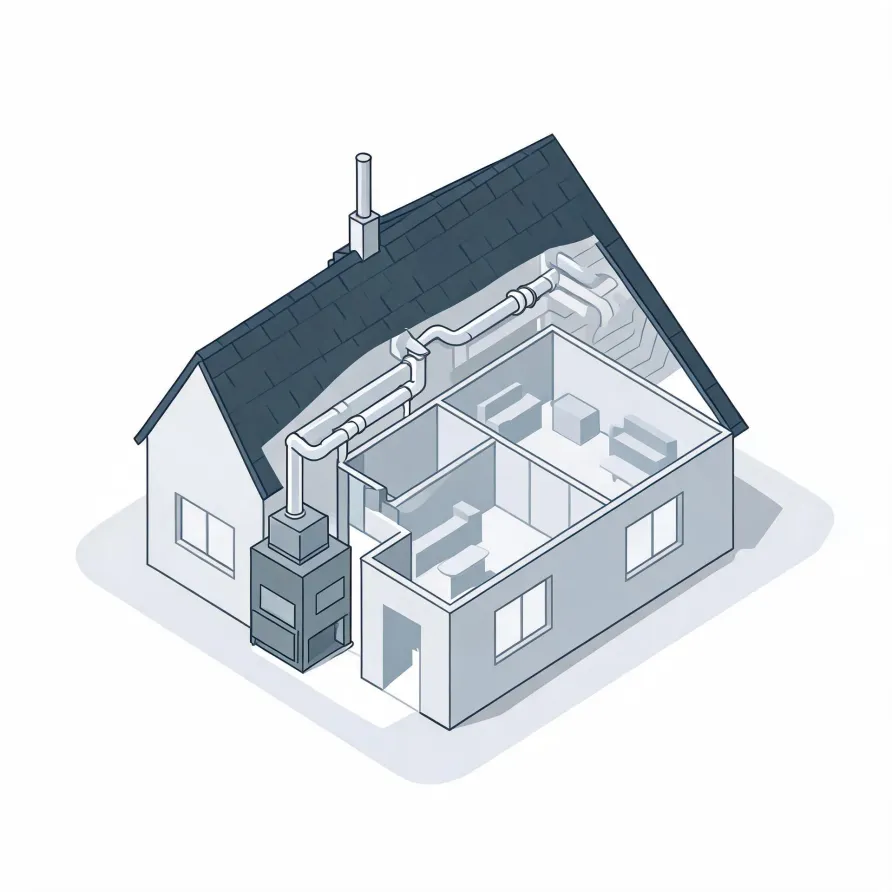
The furnace itself sits in a utility room, basement, or closet and is the central unit a contractor places first. Bolted to it is the air handler, which pulls household air in through a return and pushes conditioned air back out. The flue pipe runs from the furnace to an exterior wall or roof, carrying combustion gases safely out of the house.
The thermostat goes on an interior wall where it can read the air temperature of the living space and signal the furnace to fire. A new furnace also comes with a filter housing seated at the return-air intake, and a contractor fits a new filter there as part of the installation.
The drawing shows a typical layout, and a licensed contractor determines exactly what applies to your house and its existing setup.
Get matched in Gallatin CountyGallatin County by the Numbers
78 severe weather events were recorded in Gallatin County, Illinois between 2015 and 2024.
NOAA National Centers for Environmental Information, Storm Events Database, bulk CSV export, events 2015-01-01 through 2024-12-31.Half the homes in Gallatin County, Illinois were built in 1969 or earlier (2020-2024 ACS 5-year).
U.S. Census Bureau, 2020-2024 American Community Survey 5-Year EstimatesGallatin County, Illinois holds 2,505 housing units (2020-2024 ACS 5-year).
U.S. Census Bureau, 2020-2024 American Community Survey 5-Year EstimatesOwners occupy 77.4% of the occupied homes in Gallatin County, Illinois (2020-2024 ACS 5-year).
U.S. Census Bureau, 2020-2024 American Community Survey 5-Year EstimatesCodes & Standards Governing Furnace Installation in Gallatin County, Illinois5 sourced rules and standards
What happens when the contractor arrives
Non-weatherized gas furnaces manufactured on or after November 19, 2015 must reach 80.0 percent AFUE.
Non-weatherized oil-fired furnaces manufactured on or after November 19, 2015 must reach 83.0 percent AFUE.
Mobile home gas furnaces manufactured on or after November 19, 2015 must reach 80.0 percent AFUE.
Non-weatherized gas furnaces manufactured on or after December 18, 2028 must reach 95.0 percent AFUE, up from the 80.0 percent minimum that applies to units manufactured before that date.
Licensing Rules for Gallatin County, Illinois
Illinois leaves HVAC licensing to the municipality: state law lets the corporate authorities of each city or village examine, license and regulate heating, air conditioning and refrigeration contractors, and caps the licence fee they may charge at $50 — so who licenses you depends on the town you work in.
Severe Weather Events in Gallatin County
Weather extremes put real hours on heating equipment, and Gallatin County's climate is not uniform from year to year. A furnace sized and installed for local conditions handles that variability better than one spec'd to a national average.
78 severe weather events, 2015–2024. Source: NOAA National Centers for Environmental Information, Storm Events Database.