Tell us about the job
Takes about a minute. No obligation.
Furnace sizing in Marshall County starts with what the system will actually be asked to carry. 92 severe weather events were recorded in Marshall County, Illinois between 2015 and 2024. At that rate, severe weather is a standing feature of life for any heating system installed here, and a contractor who ignores it risks undersizing equipment or skimping on installation details that hold up fine in calmer conditions but fail here. Sealing, ducting, and equipment ratings all get scrutinized differently when the load is this consistent.
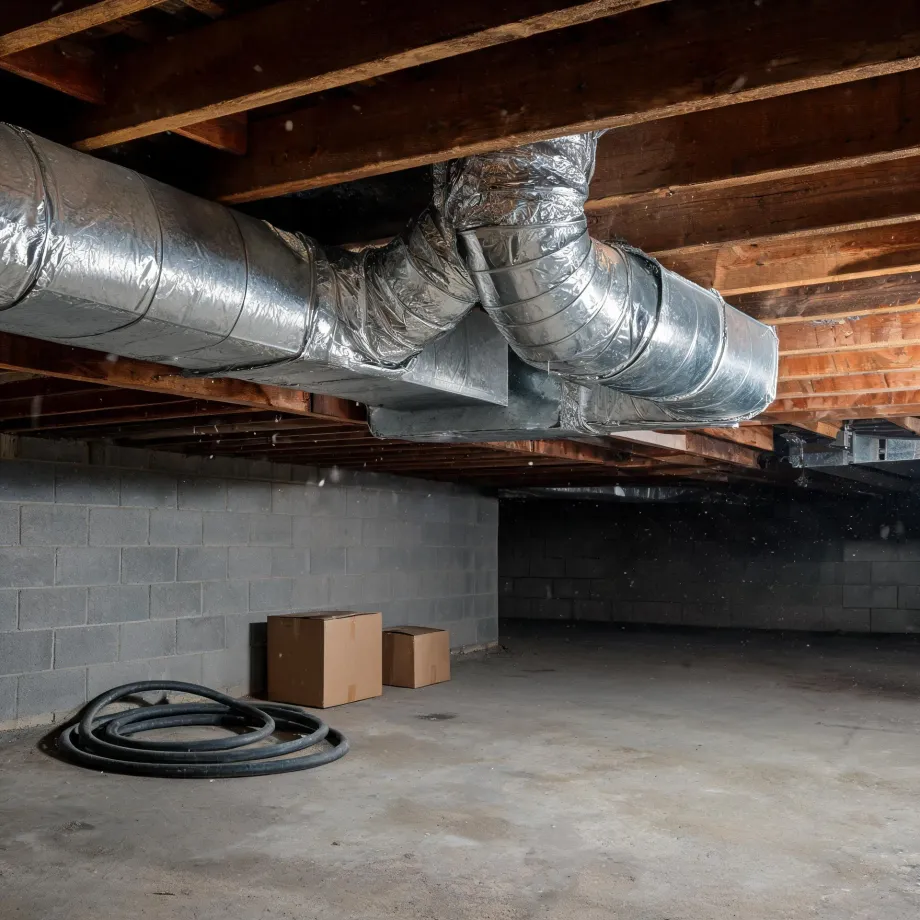
Older ductwork tells a contractor more about a furnace installation than the furnace itself does. Half the homes in Marshall County, Illinois were built in 1961 or earlier (2020-2024 ACS 5-year). Houses built around that period were ducted for the heating loads and equipment of their time, and those runs have been carrying whatever came after ever since. A new furnace draws differently and moves air differently, and whether the existing ductwork handles that without modification is the question a contractor has to answer before anything else on the job is priced. The electrical is secondary but not trivial: the service into a house of that vintage was not planned around modern equipment draws, and an upgrade may be part of the quote.
What Gets Installed With a New Furnace
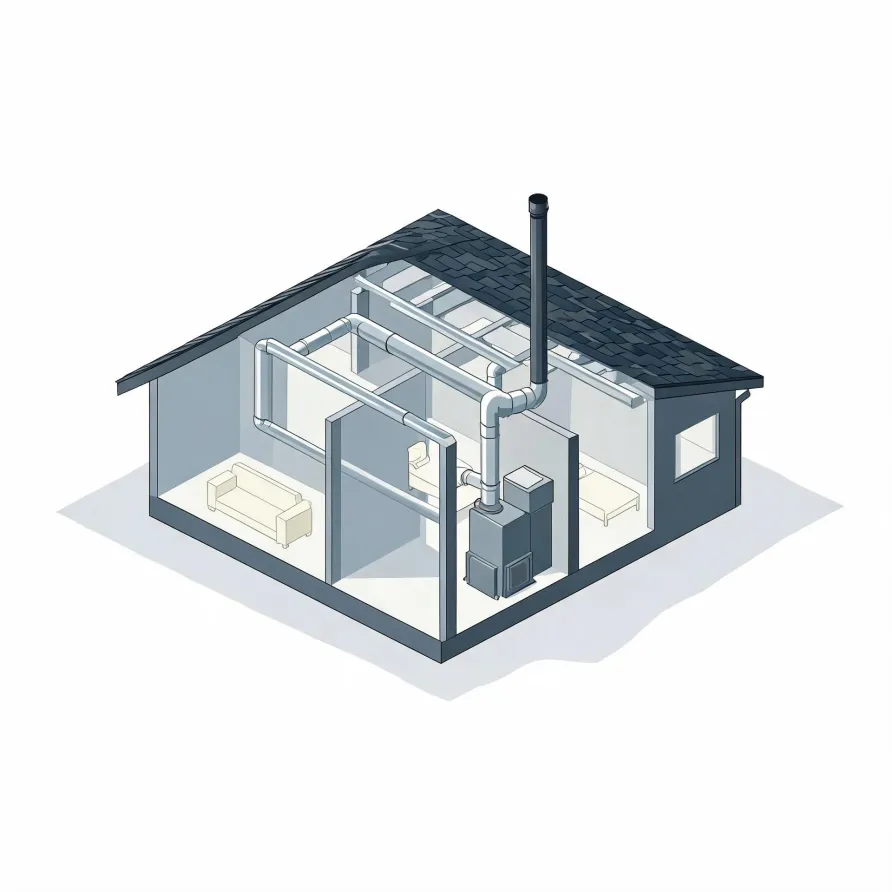
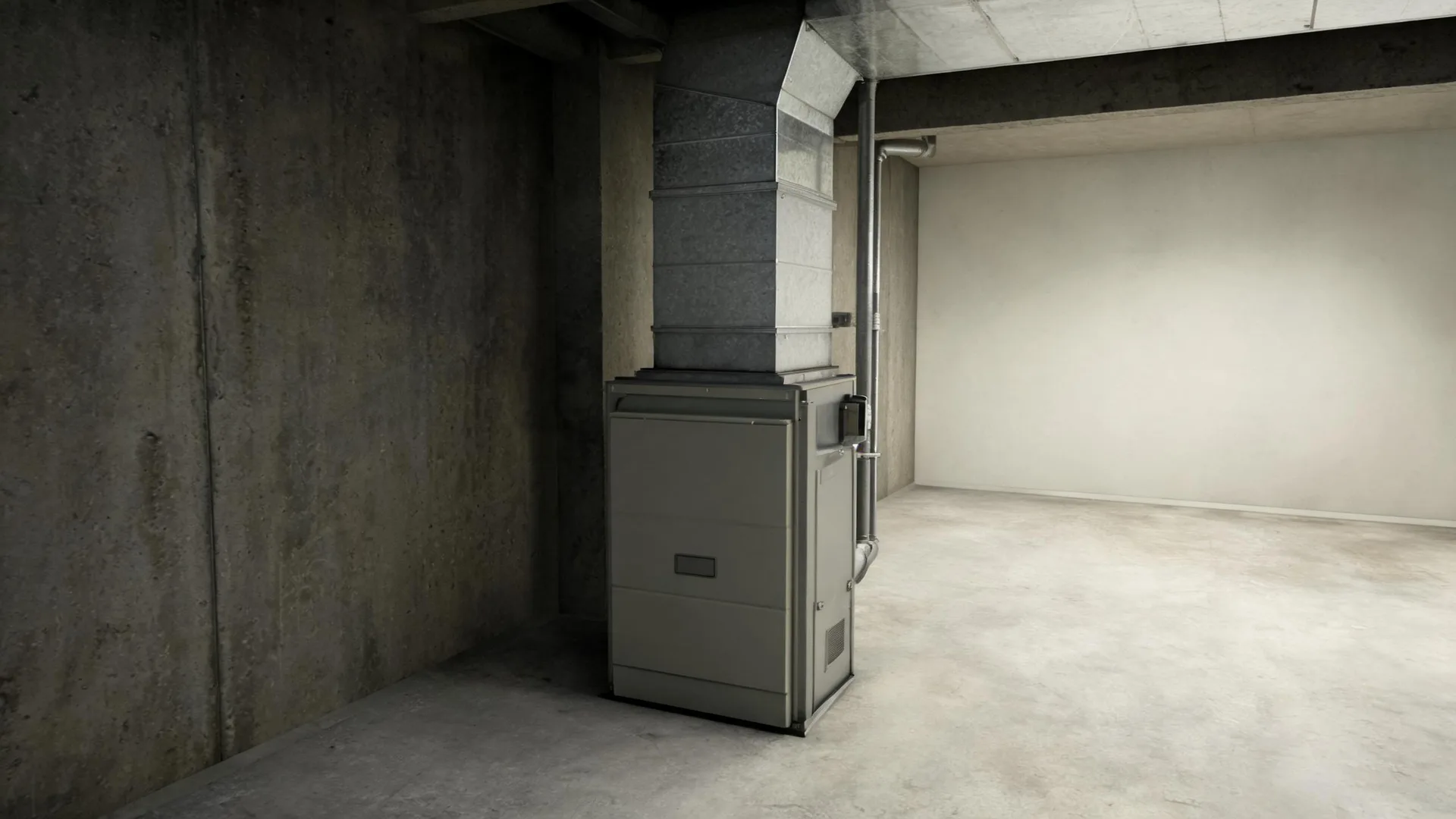
The furnace itself sits in the basement, utility room, or closet and is the unit that produces heat. Attached to it on the supply side is the plenum, a sheet-metal box that gathers heated air and feeds it into the duct branches running through the house. The flue pipe exits the furnace and carries combustion gases out through the roof or an exterior wall.
The air handler section of the furnace draws return air in through a filter cabinet, which is mounted at the unit's intake and holds the filter that screens the air before it reaches the heat exchanger. A thermostat mounts on an interior wall and is the control point that tells the furnace when to fire and when to shut down.
The drawing shows a general layout of these components, and a licensed contractor determines what applies to the specific configuration of your house.
Get matched in Marshall CountyMarshall County, by the numbers
92 severe weather events were recorded in Marshall County, Illinois between 2015 and 2024.
NOAA National Centers for Environmental Information, Storm Events Database, bulk CSV export, events 2015-01-01 through 2024-12-31.Half the homes in Marshall County, Illinois were built in 1961 or earlier (2020-2024 ACS 5-year).
U.S. Census Bureau, 2020-2024 American Community Survey 5-Year EstimatesMarshall County, Illinois holds 5,815 housing units (2020-2024 ACS 5-year).
U.S. Census Bureau, 2020-2024 American Community Survey 5-Year EstimatesOwners occupy 79.2% of the occupied homes in Marshall County, Illinois (2020-2024 ACS 5-year).
U.S. Census Bureau, 2020-2024 American Community Survey 5-Year EstimatesFurnace Installation Rules & Standards for Marshall County, Illinois5 sourced rules and standards
What HVAC Installation Looks Like in Marshall County
Non-weatherized gas furnaces manufactured on or after November 19, 2015 must reach 80.0 percent AFUE.
Non-weatherized oil-fired furnaces manufactured on or after November 19, 2015 must reach 83.0 percent AFUE.
Mobile home gas furnaces manufactured on or after November 19, 2015 must reach 80.0 percent AFUE.
Non-weatherized gas furnaces manufactured on or after December 18, 2028 must reach 95.0 percent AFUE, up from the 80.0 percent minimum that applies to units manufactured before that date.
Licensing and Legal Requirements in Marshall County, Illinois
Illinois leaves HVAC licensing to the municipality: state law lets the corporate authorities of each city or village examine, license and regulate heating, air conditioning and refrigeration contractors, and caps the licence fee they may charge at $50 — so who licenses you depends on the town you work in.
Severe Weather Events in Marshall County by Year
Weather swings in this part of Illinois put real stress on heating equipment, shortening cycles, forcing harder runs, and widening the gap between a correctly sized furnace and one that is not. A contractor who installs in Marshall County works against local conditions, and the record below is part of that picture.
92 severe weather events, 2015–2024. Source: NOAA National Centers for Environmental Information, Storm Events Database.